What Can I Recycle?

Find out what items can be recycled and how to prepare them properly, then find a center near you.

27 categories318+ materialsLocal centers nationwide

Can I Recycle This?

Get instant answers about recyclability

Popular searches:

Explore recycling by goal

Start with the question you need answered, then move between the calculator, material guide, and practical next step.

What materials can be recycled?

Common examples include paper, cardboard, metal cans, and some bottles and containers. What belongs in your bin depends on the local program, the item's shape and condition, and any attachments. A recyclable material is not automatically an accepted curbside item.

Examples of recyclable materials and what to verify locally
Material examplesWhat to check
Paper and cardboardKeep accepted paper dry; ask about food residue, coatings, and shredded paper.
Aluminum and steel cansEmpty containers and follow the program's preparation instructions; scrap hardware may need a separate buyer.
Glass bottles and jarsConfirm local glass collection. Windows, ceramics, and drinking glasses are different streams.
Plastic bottles and containersCheck accepted item types. A resin number alone does not confirm acceptance; films and bags often need separate collection.
Batteries, electronics, and appliancesUse a suitable specialist or drop-off program. Batteries and equipment containing refrigerant do not belong in a mixed curbside bin.

For tarpaulins, thermoplastic elastomers such as TPE-S, and sealed appliance components, identify the exact material and contact a program before disposal. Coatings, mixed layers, and internal contents can change the route. Use the item recycling checker for a starting point and confirm acceptance with the collector.

Browse by category

Automotive

Car parts, tires, lead-acid batteries, fluids, and related components. Auto-parts stores take batteries and used oil in many places; scrap tires go to retailers or processors (USTMA: about 79% of end-of-life tires reached beneficial markets in 2023); keep antifreeze and brake fluid off oil tanks.

16 items covered

Car BatteriesMotor OilTiresAntifreeze/CoolantBrake FluidCatalytic Converters+10 more
Explore

Batteries

Household and rechargeable batteries: alkaline, lithium-ion, button cells, NiMH, NiCd, lithium primary, and small sealed lead-acid. Drop-off rules depend on chemistry. Large rechargeable packs, such as e-bike batteries, need a drop-off that lists them. Not for EV traction or car starter batteries.

11 items covered

Alkaline BatteriesLithium-Ion BatteriesButton Cell BatteriesNickel-Metal Hydride Batteries (NiMH)Lead-Acid Batteries (Small)Nickel-Cadmium Batteries (NiCd)+5 more
Explore

EV Batteries

High-voltage EV and hybrid traction packs, modules, cells, and related parts. Dealer or licensed dismantler only. Not trash, curbside, or retail battery bins.

6 items covered

EV Lithium-Ion BatteriesEV Battery ModulesEV Battery CellsEV Battery Management SystemsEV Battery Thermal ManagementEV Battery Enclosures
Explore

Home Energy Systems

Solar panels, home battery systems, EV chargers, inverters, and related equipment. These are not curbside recyclables: arrange removal with an installer, manufacturer, or qualified electronics and battery recycler.

4 items covered

Solar PanelsHome Battery Storage SystemsEV Chargers & Wall ConnectorsSolar Inverters & Optimizers
Explore

Construction

Building materials from construction and demolition: concrete, asphalt pavement, wood, drywall, brick, roofing, and related C&D debris. Sort by type and haul to a C&D yard, crusher, or specialty program. Not curbside.

18 items covered

ConcreteDrywallWood/LumberAsphalt ShinglesMetal RoofingInsulation+12 more
Explore

Electronics

Phones, computers, TVs, printers, and other e-waste. Wipe data, then use retail drop-off, manufacturer take-back, or a certified recycler. Not curbside.

22 items covered

SmartphonesComputersCRT Monitors/TVsFlat Screen TVsPrintersGaming Consoles+16 more
Explore

Metal

Metal is one of the few recyclable materials that pays you back, and it can be recycled endlessly without losing quality. Actual recycling rates vary a lot by metal, though: steel runs an estimated 70-80%, while aluminum cans lag at about 43% (2023).

14 items covered

Aluminum CansSteel Cans#1 Copper Solid#2 Copper WireAluminum SidingStainless Steel+8 more
Explore

Hazardous

Paint, pesticides, solvents, pool chemicals, and pressurized cylinders. Household waste is exempt from federal hazardous waste rules, so your county sets the answer, and it varies more than any other category.

18 items covered

PaintPesticidesHousehold CleanersPool ChemicalsPropane TanksAerosol Cans+12 more
Explore

Household

Donate usable household items first; route the rest by material, condition, and local rules. Furniture, appliances, mattresses, textiles, cleaners, and toys usually need a dedicated reuse, special-waste, or bulky-item route rather than curbside recycling.

24 items covered

LED Light BulbsFluorescent BulbsFurnitureTextiles/ClothingSmall AppliancesLarge Appliances+18 more
Explore

Glass

Start with bottles and jars, then check your local rules. Glass is endlessly recyclable in theory, but many programs now use separate drop-off bins or do not accept glass curbside at all.

8 items covered

Glass BottlesGlass JarsWindow GlassLight Bulbs (Incandescent)Drinking GlassesMirrors+2 more
Explore

Organic Waste

Food scraps, yard waste, and other biodegradable materials suitable for composting.

8 items covered

Food ScrapsChristmas TreesWood AshManureSawdustSeaweed+2 more
Explore

Paper

Paper recycles at 60-64% and cardboard at 69-74% in the US (2024, AF&PA) - about 125,000 tons of paper and 90,000 tons of cardboard recovered every day. Grease on a pizza box and a plastic envelope window are rarely the problem; wet, soaked paper is.

14 items covered

CardboardNewspapersOffice PaperMagazinesPhone BooksPaper Bags+8 more
Explore

Plastic

US plastic recycling is 8.7% overall (EPA 2018). PET (#1) bottles reach 30.2% (NAPCOR 2024) and HDPE natural bottles 29.3% (EPA 2018). Empty bottles, leave caps on, and send bags to store drop-off, not curbside.

13 items covered

PET Bottles (#1)HDPE Containers (#2)PVC Pipes (#3)Plastic Bags (#4)Polypropylene Containers (#5)Polystyrene Foam (#6)+7 more
Explore

Textiles

EPA 2018: the US generated 17.03 million tons of textiles, with 14.7% recycled, about 66% landfilled, and about 19% combusted. Textiles are not curbside. Donate clean, dry, wearable items; use textile bins for worn pieces; trash wet or moldy ones.

13 items covered

Cotton Clothing & T-ShirtsDenim & JeansAthletic Shoes & SneakersBed Linens & TowelsWool Clothing & BlanketsSynthetic Fabrics & Activewear+7 more
Explore

Appliances

Large household appliances recycled for steel, copper, and motors. Fridges and freezers also need refrigerant recovery under Clean Air Act Section 608 rules. None of these go in weekly curbside bins.

13 items covered

RefrigeratorsWashing MachinesMicrowavesDishwashersClothes DryersRanges, Ovens & Stoves+7 more
Explore

Lighting

Bulbs, tubes, string lights, and exit fixtures. Mercury lamps need recycling drop-off; plain glass bulbs usually go in the trash; LEDs can be trashed or recycled as e-waste.

10 items covered

LED BulbsCFL BulbsFluorescent TubesHalogen BulbsIncandescent BulbsHigh-Intensity Discharge (HID) Lamps+4 more
Explore

Wood

Reuse clean wood first, then take dry, untreated lumber to a wood or C&D recycler that accepts it. Painted, stained, pressure-treated, glued, and composite wood needs a different local route and should not go in mulch, compost, or a blue recycling bin.

8 items covered

Hardwood FlooringPlywood & OSBWood PalletsUntreated Scrap WoodEngineered Wood ProductsWood Chips & Sawdust+2 more
Explore

Packaging

Cardboard, cartons, and mailers with very different recycling odds. Corrugated cardboard recycles at 69-74% (2024, AF&PA); food and beverage cartons reach 61% of US households but only about 20% actually get recycled; plastic film mailers need a store drop-off, not curbside.

16 items covered

Corrugated Cardboard BoxesAseptic Cartons (Tetra Pak)Padded Mailers (Paper)Bubble Mailers (Plastic)Coffee Pods & CapsulesDisposable Utensils & Straws+10 more
Explore

Medical & Pharmaceuticals

Use take-back for unused medications and a rigid sharps container for needles, syringes, and lancets. Other home medical items follow different routes, so separate medication, sharps, devices, packaging, and ordinary non-sharp waste before checking local rules.

22 items covered

Unused MedicationsSharps (Needles & Syringes)IV Bags and TubingProsthetics and Medical ImplantsX-ray FilmsMedical Plastics+16 more
Explore

Yard Waste

Compost or use municipal green-waste collection for leaves, grass clippings, small branches, and garden trimmings. Keep yard waste out of blue recycling carts, use the bags or bins your program allows, and check local size limits for brush.

4 items covered

LeavesGrass ClippingsTree BranchesBrush & Woody Yard Debris
Explore

Industrial/Manufacturing Waste

Manufacturing byproducts, process chemicals, and production scrap. Written for businesses, where RCRA applies in full, so the answers here are the opposite of the household guidance elsewhere on this site.

10 items covered

Machining Coolant & Cutting FluidsIndustrial Solvents & DegreasersIndustrial Batteries & Power SystemsCNC Machine Tools & Cutting ToolsIndustrial Plastic Resin WasteIndustrial Adhesives & Sealants+4 more
Explore

Furniture

Donate, sell, or repair usable furniture before considering disposal. Furniture is mostly a reuse or bulky-waste category, while metal frames may go to scrap and finished wood, upholstery, mattresses, and mixed pieces need local routes rather than curbside recycling.

7 items covered

Wooden FurnitureUpholstered FurnitureMetal FurnitureGlass FurnitureOffice FurnitureParticle Board & MDF Furniture+1 more
Explore

Sports & Recreation

Most sports gear is donated, sold, or traded, not material-recycled. Sell or donate usable equipment (Play It Again Sports, thrift, youth programs). Real specialty paths include RecycleBalls for tennis balls, BoatUS bins for fishing line, and scrap yards for metal weights and frames.

15 items covered

Sports BallsExercise EquipmentBicycles & Bike PartsCamping & Outdoor GearSports Helmets & Protective GearGolf Clubs & Equipment+9 more
Explore

Mattress & Bedding

Mattresses, pillows, bed frames, and bedding. Mattresses need a specialized recycler for the steel, foam, and fabric inside; most other bedding runs through textile donation and recycling instead.

9 items covered

Memory Foam MattressesInnerspring MattressesPillows & CushionsBed Frames & HeadboardsComforters & DuvetsBed Sheets & Linens+3 more
Explore

Food Waste

Kitchen scraps, plate waste, and food-soiled paper. Produce, coffee grounds, eggshells, and plain bread compost in any backyard pile. Meat and dairy need a municipal program, and pizza boxes now go in ordinary recycling.

7 items covered

Fruit & Vegetable ScrapsCoffee Grounds & Tea BagsPlate Scrapings & LeftoversEggshellsBread & Baked GoodsFood-Soiled Paper & Cardboard+1 more
Explore

Cryptocurrency & Mining Equipment

ASIC Bitcoin miners, mining GPUs, and high-wattage power supplies. Treat them as e-waste. Wipe storage, then recycle or resell.

3 items covered

ASIC Bitcoin MinersGPU Mining Graphics CardsMining Power Supply Units (PSUs)
Explore

Pet & Animal Supplies

Pet food containers, animal bedding, toys, accessories, and veterinary supplies that can be recycled, composted, or donated through specialized pet supply programs.

5 items covered

Pet Food Containers & BagsPet ToysPet Beds & BlanketsPet Carriers & CratesCollars, Leashes & Harnesses
Explore

Newly added material guides

New answers for packaging, plastics, household items, appliances, and more.

Energy saved and how long trash lasts

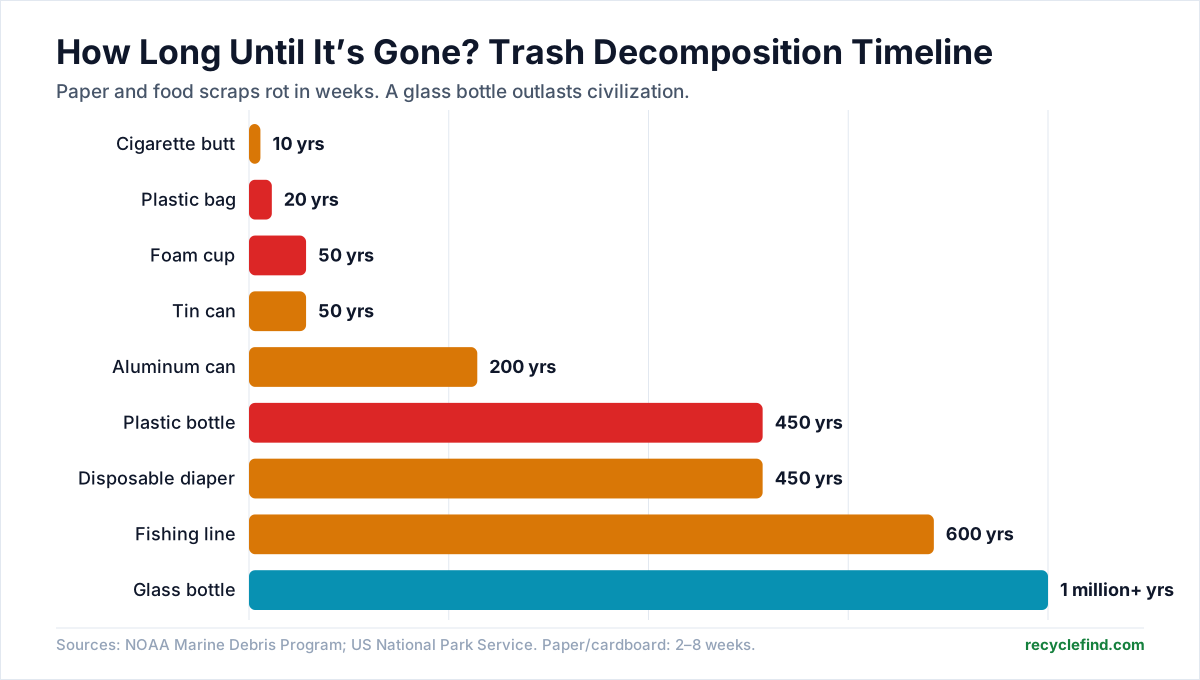
Recycling can reduce the need for virgin materials and the energy used to make them. Plastic litter can fragment into microplastics without fully disappearing; its persistence varies with the material and conditions. Sources sit under each chart.
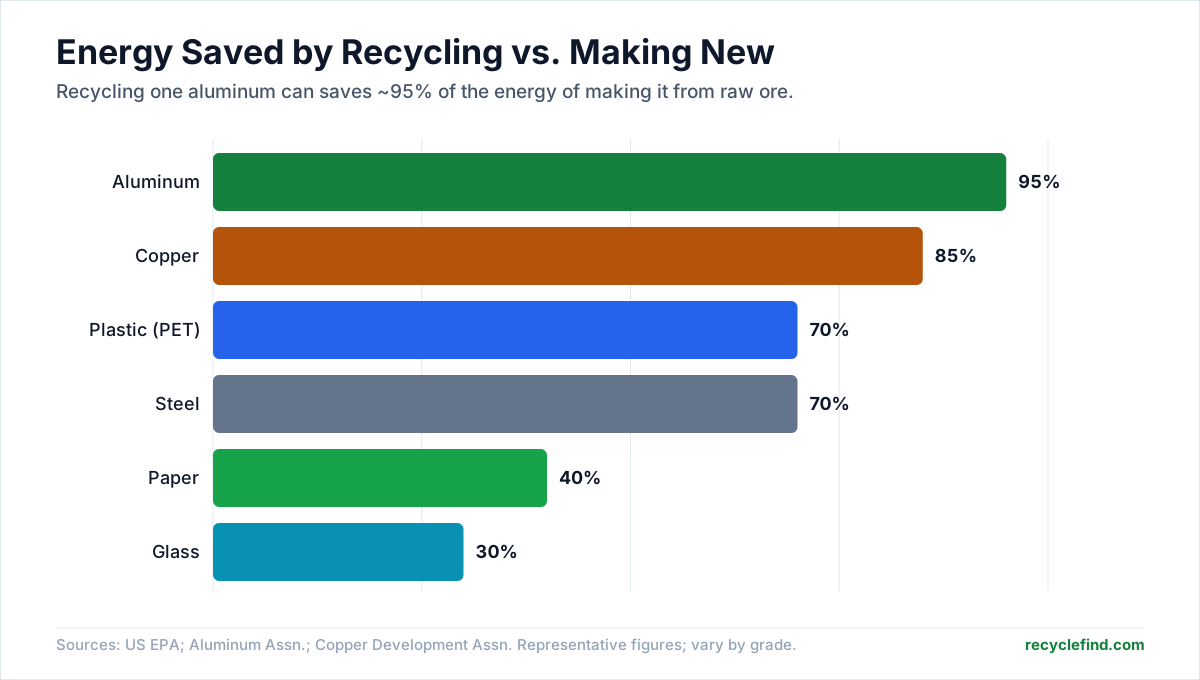
Bar chart of energy saved by recycling versus making new from raw materials: aluminum 95%, copper 85%, plastic and steel 70%, paper 40%, glass 30%.
Energy saved by recycling vs. virgin manufacturing, by material. Sources: US EPA; Aluminum Assn.; Copper Development Assn.
Illustration of commonly cited waste persistence estimates, with a warning that actual conditions vary.
Rough, commonly cited persistence estimates, not measured landfill lifetimes. Conditions vary, and plastic fragmentation does not mean disappearance.

Tools & Calculators

Working With Local Contractors

Large recycling jobs (driveway removal, patio demo, or a kitchen tear-out) usually start with the contractor doing the work. A good contractor will route concrete, brick, and clean fill to the right recycling facility instead of a landfill. In the DMV area, for example, Maryland hardscape and concrete contractor Site Doctor handles concrete recycling on hardscape projects in Silver Spring and surrounding Montgomery County neighborhoods. If you're hiring out a project, ask up front how the demolition material will be handled. It's an easy way to keep tons of debris out of landfills.

Sponsored · Peddle
4.7/5 on Trustpilot · 208K+ reviews4.5M+ cars sold

What's your junk car actually worth?

Get a real cash offer in about 2 minutes. Free towing, any condition, even if it doesn't run. No haggling, no phone calls.

See My Car's Offer

Make room for what comes next

Svala

Carry your everyday essentials in a vegan bag

Explore Svala handbags and totes for errands, work and weekends away.

Shop Svala bags