
Waste diversion rate calculator
Calculate your diversion rate with the standard waste diversion formula: recycled plus composted material divided by total waste generated. Track landfill diversion, recycling performance, and zero-waste progress.
Paper, plastic, glass, metal, etc.
Food scraps, yard waste (optional)
Non-recyclable trash
Waste diversion formula
Waste diversion rate measures the share of total waste that avoids landfill disposal through recycling, composting, reuse, donation, or other recovery methods. The basic formula is:
Diversion Rate = (Recycled Weight + Composted Weight) ÷ Total Waste Weight × 100
For example, if your household produces 100 pounds of waste in a month and recycles or composts 45 pounds, your landfill diversion rate is 45%. Businesses and schools can use the same waste diversion calculator for weekly, monthly, or annual reporting.
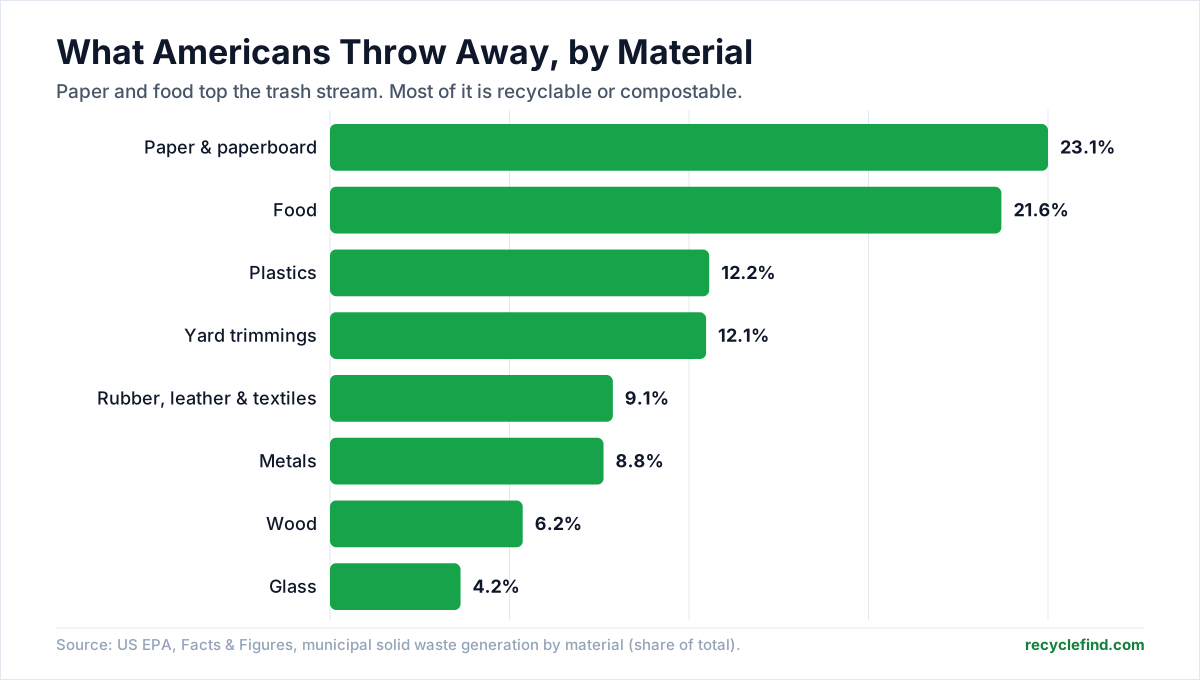
What Is in the Waste Stream
Knowing what makes up everyday trash shows where to focus. Paper, food, and plastics dominate the stream, so capturing those materials moves your diversion rate the most.
Waste diversion rate: frequently asked questions
What is a good waste diversion rate?
It depends on the setting. Households often aim for 50% or higher, while mature business, campus, and school programs may target 75% to 90% through recycling, composting, and reuse. Rates above 90% are usually described as zero waste, and most standards set that bar at 90% diverted from landfill and incineration rather than a literal 100%.
What counts as diverted waste?
Diverted waste usually includes materials that are recycled, composted, reused, donated, repaired, or otherwise kept out of landfill disposal. This calculator uses recycled plus composted weight for a clear baseline. Where definitions get argued over is incineration: burning waste for energy is counted as diversion in some frameworks and explicitly excluded in others, so state which convention you are using whenever you publish a rate.
How do you calculate a waste diversion rate?
Divide the weight of material diverted from landfill by the total weight of waste generated, then multiply by 100. Total generated is diverted plus disposed, so if you recycle 30 tons, compost 10 tons, and landfill 60 tons, you diverted 40 of 100 tons for a 40% rate. Use consistent units and the same reporting period on both sides of the division, which is where most manual calculations go wrong.
Why does weight make some programs look better than others?
Because diversion rate is a weight metric and weight is not the same as environmental benefit. Heavy, low-value material such as concrete, yard waste, or food scraps can lift a rate dramatically while light but harmful material barely registers. An organisation diverting a lot of construction rubble can post a higher number than one carefully recovering electronics and plastics. Read any diversion rate alongside what is actually in the stream.
Should I measure by weight or by volume?
Weight, wherever you can get it, because it is what haulers and processors record and it is comparable across time and sites. Volume is easier to eyeball but compresses unpredictably, so the same material can occupy very different space depending on how it was loaded. If you only have container counts, convert to weight using your hauler's average fill figures and note the assumption, rather than mixing the two units in one calculation.
How do I improve a low diversion rate?
Audit before you act. A short waste sort, physically going through a representative sample of what you throw away, tells you which two or three materials dominate the stream, and those are where the gains are. In most offices the answer is paper and cardboard; in food service it is organics. Then remove friction: put recycling and compost bins directly beside every landfill bin, because a bin that requires a walk gets used far less.
Does a high diversion rate mean less waste overall?
No, and this is the metric's biggest blind spot. Diversion rate is a ratio, so it says nothing about total volume. An organisation can double the waste it generates and still report an improved rate as long as the diverted share rises. Track total waste generated alongside the percentage, because reduction at the source is worth more than any amount of downstream sorting.
Related Resources
Construction Waste Recycling Guide
Plan material recovery and landfill diversion for construction and demolition projects.
Complete Home Recycling Guide
Build a household system that boosts your diversion rate.
Carbon Footprint Calculator
Translate diverted waste into CO2 saved from the atmosphere.
Decomposition Time Lookup
See how long items linger in landfills when you don't divert them.