
Personal carbon footprint calculator
RecycleFind estimates CO2 avoided when aluminum, plastic, paper, and other recyclables replace virgin production. Factors come from published EPA WARM averages.
Why Recycling Cuts Carbon
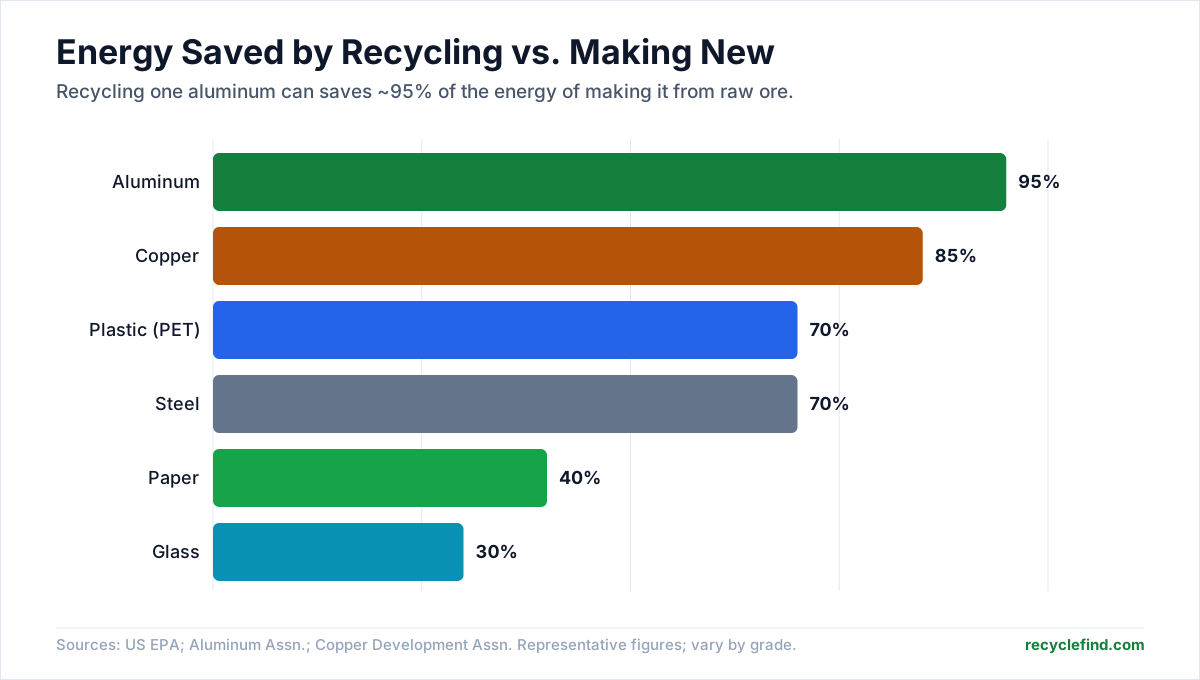
Most of recycling's climate benefit comes from avoided energy: making a product from recycled material takes far less energy than making it from raw ore or pulp, and less energy means fewer emissions.
Related Resources
Materials Database
RecycleFind material guides cover what those items go into next.
Waste Diversion Calculator
Track how much of your waste skips the landfill each year.
Complete Home Recycling Guide
Build the everyday recycling habits that reduce your household footprint.
Recycling Savings Calculator
See the dollar value of your recycling habits.
Carbon footprints: frequently asked questions
What is a carbon footprint?
The total greenhouse gas emissions caused by your activities, expressed as carbon dioxide equivalent so that different gases can be added together. It covers direct emissions such as driving and heating your home, and indirect ones embedded in the food you eat, the goods you buy, and the services you use. Personal footprints are estimates built from averages, so they are far more useful for comparing choices than as a precise measurement of you.
What is a typical carbon footprint per person?
The United States averages roughly 14 to 16 tonnes of CO2 equivalent per person per year, among the highest in the world and about three times the global average of around 4 to 5 tonnes. Climate targets generally point toward roughly 2 tonnes per person. Those gaps are large enough that individual behaviour alone does not close them, which is why the useful question is which of your choices move the most, not whether you can reach the target by yourself.
Which changes actually reduce emissions the most?
For most households in wealthy countries the largest levers are transport, home energy, and diet, roughly in that order. Cutting car travel or switching to an electric vehicle on a clean grid, reducing flights, improving insulation and heating, and eating less beef and lamb all move meaningfully more carbon than the small daily habits that get the most attention. This is worth knowing because effort spent on a low-impact change is effort not spent on a high-impact one.
How much does recycling actually reduce my carbon footprint?
Less than most people expect, though the effect is real. Recycling saves the energy that would have gone into producing material from raw resources, and for aluminum that saving is large, roughly 95% versus smelting new metal. But recycling only acts on waste you have already created. Buying less and reusing more avoids the emissions entirely, which is why reduce and reuse sit ahead of recycle in the hierarchy.
Are these results accurate?
They are an estimate built from published average emission factors, not a measurement of your household. Real emissions depend on how clean your local electricity grid is, how efficient your specific vehicle and appliances are, and how far your food travelled. Treat the number as a baseline and the comparisons as the point: the change between two scenarios is far more reliable than the absolute total.
Should I buy carbon offsets?
Offsets are best treated as a last step for emissions you genuinely cannot avoid, not as a substitute for reducing them. Quality varies widely, and investigations have repeatedly found projects that overstated their benefit, particularly forestry projects claiming to prevent deforestation that was unlikely anyway. If you do buy, prefer projects with independent verification and permanent storage, and reduce first.
What does CO2 equivalent mean?
Different greenhouse gases trap different amounts of heat over different lifetimes. Methane warms far more strongly than carbon dioxide but breaks down within decades, while nitrous oxide is stronger still and persists for over a century. CO2 equivalent converts each gas into the amount of carbon dioxide that would cause the same warming over a set period, usually 100 years, so a single number can represent a mixed set of emissions.