
Sponsored · Peddle
4.7/5 on Trustpilot · 208K+ reviews4.5M+ cars sold
What's your junk car actually worth?
Get a real cash offer in about 2 minutes. Free towing, any condition, even if it doesn't run. No haggling, no phone calls.
See My Car's OfferGet a real cash offer in about 2 minutes. Free towing, any condition, even if it doesn't run. No haggling, no phone calls.
See My Car's OfferSelling scrap? Compare local yards like CG Metals in Reno and Cloud Recycling in Roseville, or find a transfer station drop-off / municipal drop box when you need disposal, not payout.
Current Scrap Prices Average:Current Scrap Prices Avg:
Median and range from 50 U.S. yards, plus monthly grade benchmarks and FRED commodity prints.
Ver en españolMedian and range from 50 U.S. yards. Last checked Aug 24, 2026.
| Grade | Median | Range | Yards |
|---|---|---|---|
| CU-BBBare Bright | $5.34 | $5.20-$5.55 | 4 |
| CU-1#1 Copper | $5.21 | $5.10-$5.25 | 4 |
| CU-2#2 Copper | $5.06 | $5.00-$5.10 | 4 |
| BRASSYellow Brass | $3.45 | $3.20-$3.82 | 3 |
| UBCAluminum Cans | $0.85 | $0.78-$0.86 | 3 |
| AL-6063Aluminum 6063 | $1.49 | $1.15-$1.64 | 3 |
| Commodity | Region | Price | Change | % Change |
|---|---|---|---|---|
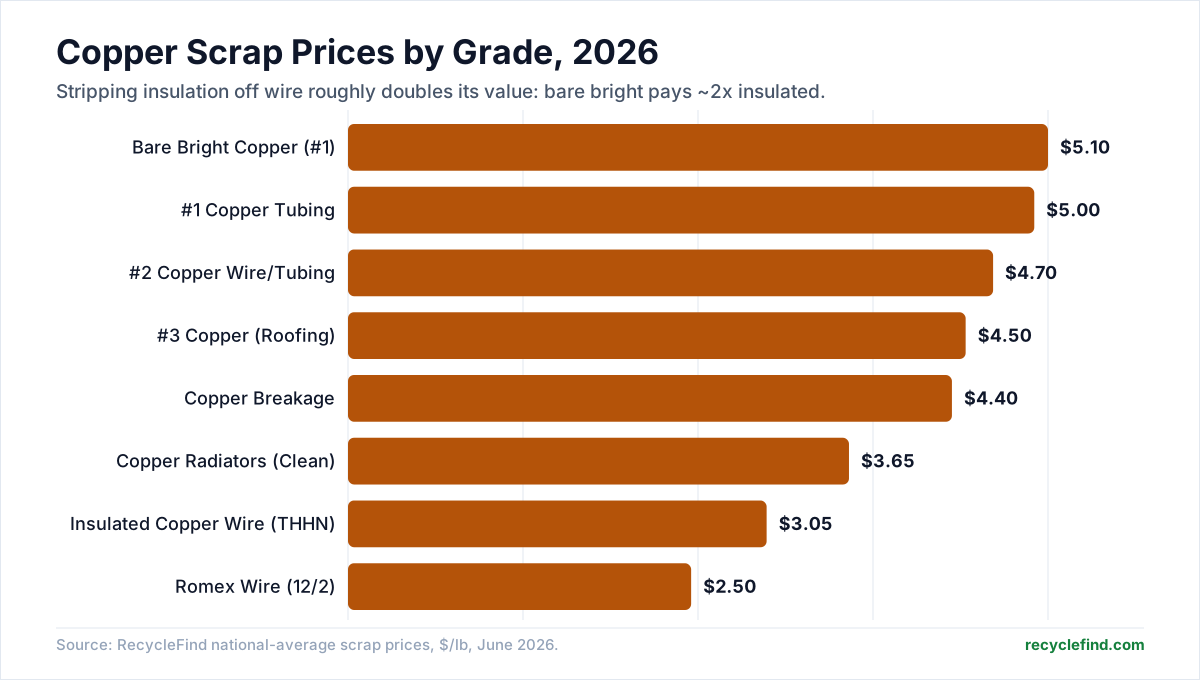
| Bare Bright Copper (#1) | National Average | $5.34 lb | N/A | N/A |
| #1 Copper Tubing | National Average | $5.21 lb | N/A | N/A |
| #2 Copper Wire/Tubing | National Average | $5.06 lb | N/A | N/A |
| Copper Breakage | National Average | $4.70 lb | N/A | N/A |
| #3 Copper (Roofing) | National Average | $4.47 lb | N/A | N/A |
| Insulated Copper Wire (THHN) | National Average | $3.71 lb | N/A | N/A |
| Copper Radiators (Clean) | National Average | $3.55 lb | N/A | N/A |
| Romex Wire (12/2) | National Average | $2.80 lb | N/A | N/A |
| Commodity | Region | Price | Change | % Change |
|---|---|---|---|---|
| Aluminum/Copper Radiators | National Average | $2.70 lb | N/A | N/A |
| Clean Aluminum Extrusions (6063) | National Average | $1.49 lb | N/A | N/A |
| Aluminum Wheels (Clean) | National Average | $1.02 lb | N/A | N/A |
| Aluminum Cans (UBC) | National Average | $0.85 lb | N/A | N/A |
| 6061 Aluminum Extrusions | National Average | $0.85 lb | N/A | N/A |
| Painted Aluminum Siding | National Average | $0.83 lb | N/A | N/A |
| Aluminum Radiators | National Average | $0.71 lb | N/A | N/A |
| Old Sheet Aluminum | National Average | $0.70 lb | N/A | N/A |
| Cast Aluminum | National Average | $0.67 lb | N/A | N/A |
| Dirty Aluminum | National Average | $0.15 lb | N/A | N/A |
| Commodity | Region | Price | Change | % Change |
|---|---|---|---|---|
| Bronze | National Average | $4.20 lb | N/A | N/A |
| Yellow Brass | National Average | $3.45 lb | N/A | N/A |
| Red Brass | National Average | $3.25 lb | N/A | N/A |
| Brass Shells | National Average | $3.15 lb | N/A | N/A |
| Brass Radiators | National Average | $3.15 lb | N/A | N/A |
| Mixed Brass | National Average | $2.45 lb | N/A | N/A |
| Commodity | Region | Price | Change | % Change |
|---|---|---|---|---|
| Steel Rebar | National Average | $0.10 lb | N/A | N/A |
| Plate & Structural Steel | National Average | $0.10 lb | N/A | N/A |
| Shredded Steel | National Average | $0.09 lb | N/A | N/A |
| Auto Cast (Rotors/Drums) | National Average | $0.09 lb | N/A | N/A |
| Heavy Melt Steel (HMS) | National Average | $0.08 lb | N/A | N/A |
| Cast Iron | National Average | $0.08 lb | N/A | N/A |
| Light Iron | National Average | $0.07 lb | N/A | N/A |
| Commodity | Region | Price | Change | % Change |
|---|---|---|---|---|
| 316 Stainless Steel | National Average | $0.73 lb | N/A | N/A |
| 304 Stainless Steel | National Average | $0.34 lb | N/A | N/A |
| Mixed Stainless Steel | National Average | $0.26 lb | N/A | N/A |
| 430 Stainless Steel | National Average | $0.24 lb | N/A | N/A |
| Commodity | Region | Price | Change | % Change |
|---|---|---|---|---|
| Lead (Soft) | National Average | $0.52 lb | N/A | N/A |
| Car/Truck Batteries | National Average | $0.21 lb | N/A | N/A |
| UPS Batteries | National Average | $0.18 lb | N/A | N/A |
| Wheel Weights | National Average | $0.13 lb | N/A | N/A |
| Commodity | Region | Price | Change | % Change |
|---|---|---|---|---|
| Carbide (Tungsten) | National Average | $19.00 lb | N/A | N/A |
| Cobalt | National Average | $11.50 lb | N/A | N/A |
| Nickel | National Average | $2.50 lb | N/A | N/A |
| Zinc Die Cast | National Average | $0.50 lb | N/A | N/A |
| Titanium | National Average | $0.40 lb | N/A | N/A |
| Magnesium | National Average | $0.40 lb | N/A | N/A |
| Commodity | Region | Price | Change | % Change |
|---|---|---|---|---|
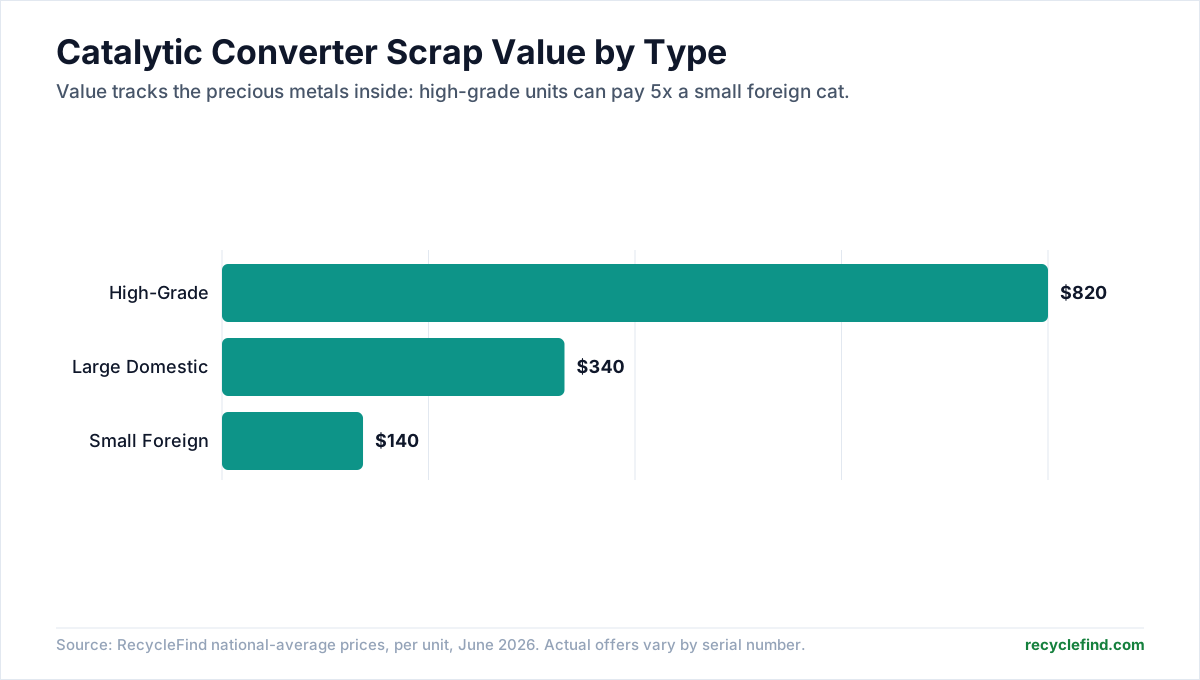
| Catalytic Converters (High-Grade) | National Average | $780.00 ea | N/A | N/A |
| Catalytic Converters (Large Domestic) | National Average | $320.00 ea | N/A | N/A |
| Catalytic Converters (Small Foreign) | National Average | $150.00 ea | N/A | N/A |
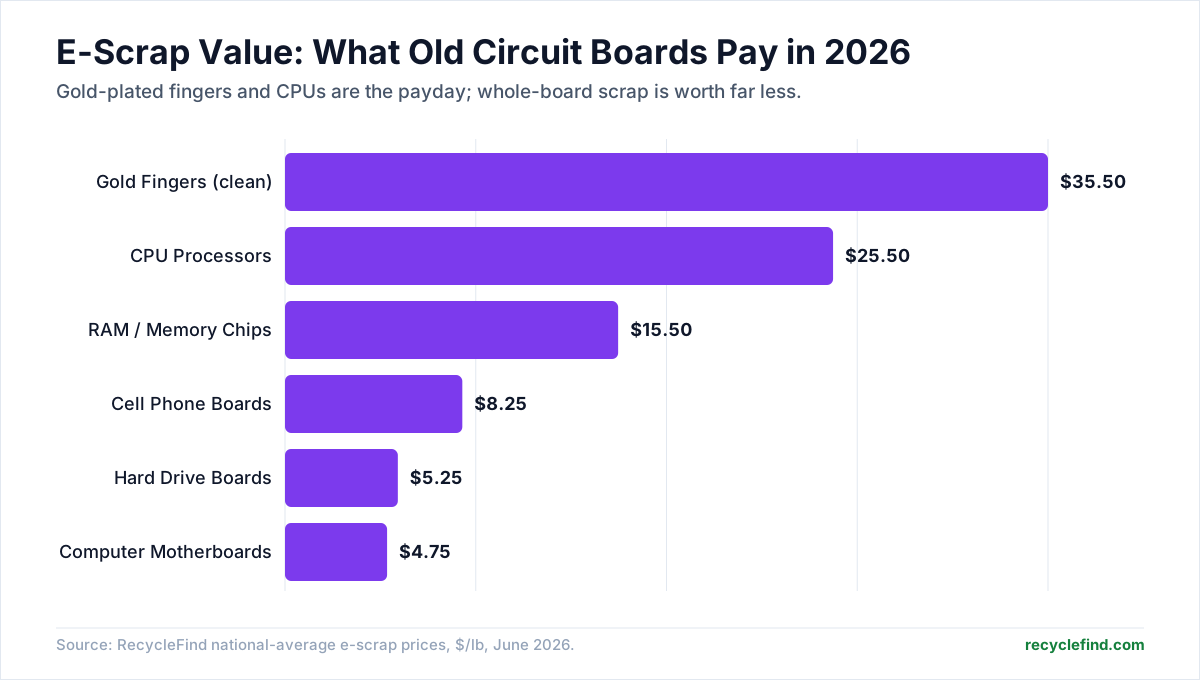
| Gold Fingers (Clean) | National Average | $30.00 lb | N/A | N/A |
| Ram/Memory Chips | National Average | $12.00 lb | N/A | N/A |
| CPU Processors | National Average | $8.00 lb | N/A | N/A |
| Hard Drive Boards | National Average | $4.75 lb | N/A | N/A |
| Cell Phone Boards | National Average | $4.50 lb | N/A | N/A |
| Computer Motherboards | National Average | $2.00 lb | N/A | N/A |
| Power Supply Units | National Average | $0.24 lb | N/A | N/A |
Please Note: Prices shown are current national averages for general market reference. Actual offers vary by location, quantity, cleanliness, grade, and yard. Call ahead for a firm quote.
These charts compare the U.S. national average values above. They show grade-to-grade differences, not guaranteed local payouts or a commodity-exchange price.
Next step
Have a whole junk car? Compare the full-vehicle offer.
Peddle buys the vehicle with free pickup and a firm online offer in about 2 minutes, in any condition.
Get My Peddle OfferCopper set an all-time high of $6.60 per pound on the COMEX in May 2026 and was still trading near $6.53 in early August. Hyperscale data centers ordered bus bars, heavy-gauge cabling, switchgear, and liquid cooling loops faster than mines could add supply.
A new mine takes years to permit and build, so recycled copper is filling the gap. Bare bright benefits most, because it is clean enough to go back into the supply chain with the least processing. Yards paid roughly $5.20 to $5.55 per pound for #1 bare bright in the sampled panel, against a national average of $5.34 in the table above.
Copper and brass both gave back ground in the second week of August (copper off about $0.13 per pound, brass about $0.03) after copper grades had gained roughly $0.11 the week before. Aluminum ticked up a cent or two and steel stayed flat. If you are sitting on a large copper load, the week you sell is worth more than it was a year ago.
A blended "copper scrap" average near $2 per pound includes insulated wire and low grades. Bare bright is a different product. Compare yards on the same grade.
Manual ($30-50), drill-powered ($100-150), or automatic ($200+). Automatic models process 50+ ft/min for serious volume.
Identify ferrous vs non-ferrous instantly. Keep steel out of the copper and aluminum bins.
Check yard weights against your own scale before you argue a ticket.
RecycleFind publishes a free beginner guide covering metal identification, safety, tools, and what a first load is actually worth.
The paid RecycleFind professional guide covers industrial contracts, commodity timing, and running scrap as a business.
| Season | Months | Typical vs average |
|---|---|---|
| Winter | Dec-Feb | 10-15% below avg |
| Spring | Mar-May | 15-25% above avg |
| Summer | Jun-Aug | Near average |
| Fall | Sep-Nov | 5-10% above avg |
#1 Bare Bright Copper
$4.72-5.65/lb
Clean, uncoated, unalloyed copper wire and cable. No oxidation, solder, or attachments. Minimum 1/16" diameter. This is 99%+ pure copper.
Example: Stripped building wire with no corrosion or coating.
#1 Copper
$4.64-5.35/lb
Clean copper with minor oxidation allowed. Can have minimal solder. Bus bars, clean tubing, clippings. 95-98% pure.
Example: Cleaned copper plumbing pipe, copper bus bars.
#2 Copper
$4.15-5.15/lb
Oxidized, tarnished, or has coatings/solder. Small attachments allowed. Paint or minor insulation OK. 85-94% pure.
Example: Old wiring with some insulation left, painted copper.
Insulated Copper Wire
$1.17-3.86/lb
Wire still in plastic insulation. Price based on copper recovery percentage. Thin wire yields less copper than thick wire. Check the insulated wire versus stripped copper estimate before you process a load.
Example: Romex, extension cords still in jacket.
The difference between #1 Bare Bright and insulated wire is often about $2.00/lb or more. On a 100 lb load, that can be $200+. Spending an hour stripping thick wire is usually worth it.
Visual inspection
First check for obvious contamination, attachments, or wrong metals mixed in. Experienced buyers can identify most metals by sight and weight.
Magnet test
Separates ferrous (magnetic) from non-ferrous. Stainless steel is slightly magnetic despite being non-ferrous. This is the quickest sorting method.
File or scratch test
Files through surface coatings to reveal true metal color underneath. Helps identify plated metals vs solid metals.
Density or weight test
Copper is heavier than brass, brass heavier than aluminum. Buyers develop a feel for this over time.
XRF analyzer (high-end yards)
X-ray fluorescence gun provides instant metal composition. Used for brass alloys, stainless grades, and verifying high-value loads. Accurate to 0.1%.
Spark test (steel grades)
Grinding different steel types produces different spark patterns. Helps separate mild steel from stainless or tool steel.
For the national numbers behind these swings, including USGS figures on US scrap volumes, prices and how much steel comes out of end-of-life vehicles each year, see the RecycleFind recycling statistics reference.
Mixed metals get the lowest price tier. A load worth $400 when separated becomes $150-200 mixed. That is $200 left on a 10-minute sort.
A yard 5 miles away can pay 30% less, be closed, or refuse the material. Fifteen minutes on the phone beats a wasted trip.
Small loads get standard rates. Wait to accumulate 500+ lbs and yards often quote 10-15% more, plus you save gas. The RecycleFind beginner's guide covers first loads.
Winter slumps (December-February) often mean 10-15% less than spring prices. RecycleFind monthly market reports track those moves.
A 5% discrepancy on a 500 lb load costs $25-40. Weigh at home and watch the yard scale.
Most common for small loads under $500. You get paid on the spot. Carrying a large cash payout has its own risk.
Standard for loads over $500 or business accounts. Creates a paper trail. Expect 1-3 business days to clear.
Some yards deposit to a bank account. Fast records, but you set up the account first.
Many states require scrap yards to hold materials for 3-10 days before processing to help law enforcement recover stolen goods. This doesn't affect your payment, but it's why yards track everything carefully.
Building a relationship with one yard means faster processing once you're a known, trusted seller. They'll still verify everything, but the process becomes routine.
Cleaning out a garage and basement over a weekend:
Time investment: 4-5 hours. Hourly rate: $25-31/hour. RecycleFind's beginner guide covers a first load. Estimate each metal with the copper wire calculator, aluminum scrap value calculator, and brass scrap value calculator.
Full kitchen and bathroom renovation scrap:
Plus dumpster fee savings ($200-400). RecycleFind's professional scrap metal guide covers larger jobs.
Monthly earnings from dedicated sourcing (15-20 hours/week):
Hourly rate: $17-29/hour. Many part-timers earn $1,000-2,000/month. RecycleFind monthly market reports track copper, aluminum, and steel.
Estimate a mixed load with RecycleFind's scrap value calculator and the grade prices on this page:
Calculate scrap valueYards move faster when metal is sorted, you know the approximate weight, and ID is already out. Fridays and month-end are the slowest lines. Regulars who follow the yard's unload rules get through first.
Disclaimer: This is general information, not tax advice. Consult a tax professional for your specific situation.
Hobby versus business
Selling your own household scrap occasionally is typically considered personal property sale, not taxable income. But if you're actively sourcing scrap to resell (buying from others, regular pickups, advertising services), the IRS may consider it a business.
The $600 threshold
If you earn $600+ per year from a single yard, they're required to file a 1099 form reporting your income. You'll need to report this on your tax return as self-employment income.
Multiple yards
Even if you stay under $600 at each yard, you still need to report total income if scrapping is a business activity. Spreading sales across yards doesn't avoid tax obligations.
If you're running a scrapping business, you can deduct legitimate business expenses:
If scrapping is a business, you'll owe self-employment tax (15.3% for Social Security and Medicare) on top of regular income tax. Many part-time scrappers are surprised by this.
Quarterly estimated tax payments may be required if you expect to owe $1,000+ in taxes. Set aside 25-30% of profits to cover tax obligations.
1. Get a dedicated notebook or spreadsheet for scrap income
2. After each yard trip, record: Date, Yard name, Materials sold, Weight, Price per lb, Total paid
3. Keep all receipts in a folder or envelope (physical or scanned)
4. Track expenses separately with receipts
5. Review monthly to see if you're on track for $600+ threshold
Curbside pickup days
Check your city's bulk trash schedule. Drive through neighborhoods on collection day morning. Good finds: washers, dryers, water heaters, swing sets, lawnmowers. Get there early before other scrappers.
Appliance stores
Offer to haul away old units during delivery. Many stores pay for disposal, so you're saving them money. Build relationships with delivery drivers who can call you directly. Best items: refrigerators, stoves, dishwashers.
Construction and demolition sites
Always get permission from the foreman first. Many sites have dumpsters full of wire, pipe, ductwork, and metal framing. Offer to clean up their scrap piles for free. Visit during lunch breaks to ask.
Property managers
Contact companies managing apartments and foreclosures. They often need appliances, water heaters, and AC units removed. Some will pay you to haul it away. This can become a regular pickup list.
Auto repair shops
Brake rotors, catalytic converters, radiators, wheels, and batteries. Build relationships and offer to pick up weekly. Some shops already have scrap arrangements, but many don't.
HVAC companies
Old AC units and copper coils from changeouts. HVAC techs often leave old units behind. Offer to pick up from their shop or job sites. Peak season is summer.
Central Air Conditioners
20-40 lbs of copper coils per unit. Worth $80-150. Look for old units during HVAC upgrades.
Electric Motors (Large)
Industrial motors, pool pumps, compressors. Can contain 5-20 lbs of copper windings. Worth $20-80 each.
Copper Pipe & Fittings
Old houses often have all-copper plumbing. Current public #1 copper quotes span roughly $4.64-5.35/lb. Renovation projects can be valuable. If a Waco-area renovation uncovers a clogged or slow drain, consider professional drain cleaning services.
Brass Fixtures & Valves
Old faucets, doorknobs, decorative hardware. Heavy brass pieces can be $2-5 each. Older houses have more of it.
Commercial Kitchen Equipment
Stainless tables, sinks, hoods from restaurant closures and remodels. The steel is heavy, so the per-pound rate adds up.
Computer Servers
Corporate IT refreshes. Aluminum heatsinks, copper components, gold-plated pins. Use the e-waste scrap value calculator to separate likely resale items from board-grade scrap.
Industrial Shelving & Racks
Warehouse liquidations. Heavy steel racks, often 500+ lbs. Load is worth $40-80 in steel alone.
Aluminum Wheels & Rims
Tire shops often have piles. 15-25 lbs each. Check behind tire shops - many give them away.
Leave a card
Drop cards at contractors' offices, property managers, and appliance stores. "Free appliance and metal removal" is the service to put on it.
Local groups
Facebook groups for contractors, landlords, and estate sales. Offer cleanup. Some will call you back.
Last day of an estate sale
Visit when they need the house empty. Offer to take leftover metal. Older homes have more of it.
Season
Spring cleanups (March-May) and fall yard work (Sept-Oct) put the most metal on curbs. AC units peak in summer.
RecycleFind's beginner guide covers first loads. The professional guide includes templates for contacting businesses.
RecycleFind tracks 50 U.S. yards and shows the median plus range on the ticker. The full grade table is a broader national average researched monthly. RecycleFind refreshes FRED metal and diesel charts every six hours.
Yard quotes follow LME and COMEX copper, mill demand, freight, and how clean the load is. RecycleFind charts IMF copper and aluminum plus U.S. diesel from FRED next to the grade table. A rural Midwest yard can pay 10-15% below a West Coast yard on the same grade because of transport costs.
Bare bright copper is the highest-priced common grade on RecycleFind's table, then brass and clean aluminum. Steel and iron pay less per pound. Most yards still take them.
Sort by grade, strip thick copper if the extra per pound beats your time, weigh at home, and call three yards on the same grade. RecycleFind's table is a national average, not a local quote.
Ferrous metals contain iron and stick to a magnet: steel and cast iron. Non-ferrous metals do not: copper, aluminum, brass. RecycleFind's table prices non-ferrous grades higher per pound.
Yes. Insulation, dirt, and mixed metals get deducted from the weight or dropped a grade. Stripping copper wire can roughly double the per-pound rate versus leaving the jacket on.
Yard quotes in August 2026 run about $30-230 for small foreign converters, $80-330 for large domestic units, and $70-800 for high-grade or exotic models. The spread within each type is wide because value tracks precious metal content (platinum, palladium, rhodium) and the specific part number, so the table above shows blended midpoints rather than what any one converter will fetch. Always verify ownership documentation.
There is no reliably best month nationwide. Local yard demand, mill schedules, freight costs, and commodity markets can outweigh seasonality. Compare same-day quotes from several yards and weigh any possible price gain against storage, theft, and transportation costs.
The August 24, 2026 national average is about $0.85 per pound. A typical empty 12-ounce can weighs about half an ounce, so the value per can is only a few cents and depends on the local yard's rate.
RecycleFind publishes U.S. national average yard quotes, which is what scrap yards pay. FRED publishes IMF global copper in dollars per metric ton, converted on this page to dollars per pound. RecycleFind bare bright is a fraction of that IMF cathode price because yards sort, process, and ship scrap, not refined cathode.
RecycleFind refreshes FRED copper, aluminum, nickel, lead, zinc, steel scrap, and U.S. diesel series every six hours. IMF and BLS series are monthly, so a new observation appears after FRED publishes the month, with a lag of several weeks. EIA diesel is weekly. RecycleFind yard quotes update on a separate monthly research cycle.
RecycleFind does not stream live LME or COMEX ticks. RecycleFind charts IMF copper, aluminum, nickel, lead, and zinc, BLS scrap producer price indexes, and EIA U.S. diesel retrieved from FRED, Federal Reserve Bank of St. Louis. Local yard offers remain the payout.
EIA U.S. retail diesel updates weekly. RecycleFind shows it because freight is a real cost when a yard hauls bulky steel to a mill. RecycleFind does not subtract diesel from the yard quote in the table. RecycleFind yard quotes stay the source of truth.
RecycleFind does not publish a global yard table. For Johannesburg quotes, see scrapmetaljoburg.co.za.
RecycleFind lists recycling centers that accept scrap metal, by city and state.
Calculate what your metals are worth before you sell to a local yard.
Compare gold melt value with a realistic buyer payout by karat and weight.
Calculate sterling and coin-silver melt value, fees, and likely cash payout.
Instant scrap value estimates for 80+ items, from copper wire to appliances.
Compare insulated wire with stripped copper and include the value of your time.
Estimate brass value by grade, weight, and preparation before you visit a yard.
RecycleFind grade prices are a starting point. These guides cover identification, stripping, and larger loads.
Identify common metals, build a safe starter kit, and understand how yards buy scrap.
Learn grading, sorting, sourcing, and margin practices that matter on larger loads.
Learn when stripping pays, how to test a sample, and how to prepare wire safely.
Follow the market forces behind changing copper, aluminum, steel, and brass prices.
Get a real cash offer in about 2 minutes. Free towing, any condition, even if it doesn't run. No haggling, no phone calls.
See My Car's OfferIMF copper was $6.14/lb in July 2026, unchanged from the prior month. IMF aluminum was $1.43/lb, down 8.2%. BLS iron and steel scrap PPI was 580.5, down 1.5%. U.S. retail diesel was $6.29/gal for the week of Sep 14, 2026, up 5.3% from the prior week.RecycleFind yard quotes in the table above are the payout, not these benchmarks. Copper, aluminum, and steel charts
RecycleFind yard quotes in the table above are the source of truth for what U.S. yards pay. RecycleFind charts IMF metals, BLS scrap indexes, and weekly U.S. diesel from FRED so visitors can see whether the spot market and freight moved. IMF and BLS series are monthly, with a publication lag. RecycleFind refreshes FRED data every six hours.
| Benchmark | Latest | vs prior | vs year ago | 12-month range |
|---|---|---|---|---|
| IMF copperJuly 2026 | $6.14/lb | unchanged | up 38.6% | $4.39/lb to $6.15/lb |
| IMF aluminumJuly 2026 | $1.43/lb | down 8.2% | up 21.2% | $1.18/lb to $1.66/lb |
| BLS steel scrap PPIAugust 2026 | 580.5 | down 1.5% | up 9.5% | 517.2 to 614.8 |
| U.S. retail dieselSep 14, 2026 | $6.29/gal | up 5.3% | up 68.1% | $3.46/gal to $6.29/gal |
IMF aluminum was down 8.2% in July 2026. BLS aluminum base scrap PPI was up 1.2% in the same month. Ingot and scrap did not move together.
RecycleFind indexes each FRED series to 100 at the start of the window. A drop below 100 means that series is below its level from 36 months ago.
RecycleFind charts IMF nickel, lead, and zinc because they sit behind stainless, batteries, and die cast. RecycleFind yard quotes for these metals remain the payout.
| Benchmark | Latest | vs prior | vs year ago | 12-month range |
|---|---|---|---|---|
| IMF nickelJuly 2026 | $7.54/lb | down 5.4% | up 10.6% | $6.65/lb to $8.52/lb |
| IMF leadJuly 2026 | $0.84/lb | down 5.3% | down 7.6% | $0.84/lb to $0.91/lb |
| IMF zincJuly 2026 | $1.63/lb | up 1.6% | up 30.1% | $1.27/lb to $1.63/lb |
IMF Global Price of Copper (PCOPPUSDM), Aluminum (PALUMUSDM), Nickel (PNICKUSDM), Lead (PLEADUSDM), and Zinc (PZINCUSDM); BLS Producer Price Indexes for iron and steel scrap (WPU1012), copper base scrap (WPU102301), and aluminum base scrap (WPU102302); and EIA U.S. diesel (GASDESW), retrieved from FRED, Federal Reserve Bank of St. Louis, on 2026-09-21. Series: copper, aluminum, nickel, lead, zinc, steel scrap, copper scrap PPI, aluminum scrap PPI, diesel. RecycleFind retrieves these series from FRED. RecycleFind is not endorsed or certified by the Federal Reserve Bank of St. Louis.
RecycleFind converts its August 2026 national averages into a trip-planner table. RecycleFind does not treat these weights as a local offer.
| Grade | RecycleFind $/lb | Pounds for $100 | Pounds for $500 |
|---|---|---|---|
| Bare Bright Copper (#1) | $5.34/lb | 18.7 lb | 93.6 lb |
| #1 Copper Tubing | $5.21/lb | 19.2 lb | 96.0 lb |
| #2 Copper Wire/Tubing | $5.06/lb | 19.8 lb | 98.8 lb |
| Insulated Copper Wire (THHN) | $3.71/lb | 27.0 lb | 134.8 lb |
| Romex Wire (12/2) | $2.80/lb | 35.7 lb | 178.6 lb |
| Aluminum Cans (UBC) | $0.85/lb | 118 lb | 588 lb |
| Clean Aluminum Extrusions (6063) | $1.49/lb | 67.1 lb | 335.6 lb |
| 304 Stainless Steel | $0.34/lb | 294 lb | 1,471 lb |
| Nickel | $2.50/lb | 40.0 lb | 200.0 lb |
| Lead (Soft) | $0.52/lb | 192 lb | 962 lb |
| Zinc Die Cast | $0.50/lb | 200 lb | 1,000 lb |
| Car/Truck Batteries | $0.21/lb | 476 lb | 2,381 lb |
| Light Iron | $0.07/lb | 1,429 lb | 7,143 lb |
RecycleFind also has a scrap value calculator for mixed loads.
IMF series track refined metal. BLS producer price indexes track U.S. scrap. RecycleFind shows both because they do not always move together.
| Benchmark | Latest | vs prior month | vs year ago |
|---|---|---|---|
| IMF copper (cathode, $/lb) | $6.14/lb | unchanged | up 38.6% |
| BLS copper base scrap PPI | 993.3 | up 4.2% | up 43.0% |
| IMF aluminum (ingot, $/lb) | $1.43/lb | down 8.2% | up 21.2% |
| BLS aluminum base scrap PPI | 475.5 | up 1.2% | up 30.6% |
| BLS iron and steel scrap PPI | 580.5 | down 1.5% | up 9.5% |
RecycleFind divides each yard quote by the matching IMF print for July 2026. The gap is sorting, processing, freight, and grade, not a missing tick on this page.
| RecycleFind grade | Yard quote | Share of IMF copper |
|---|---|---|
| Bare Bright Copper (#1) | $5.34/lb | 86.9% |
| #1 Copper Tubing | $5.21/lb | 84.8% |
| #2 Copper Wire/Tubing | $5.06/lb | 82.4% |
| #3 Copper (Roofing) | $4.47/lb | 72.8% |
| Insulated Copper Wire (THHN) | $3.71/lb | 60.4% |
| Romex Wire (12/2) | $2.80/lb | 45.6% |
| RecycleFind grade | Yard quote | Share of IMF aluminum |
|---|---|---|
| Aluminum Cans (UBC) | $0.85/lb | 59.3% |
| Clean Aluminum Extrusions (6063) | $1.49/lb | 104.0% |
| Cast Aluminum | $0.67/lb | 46.8% |
| Aluminum Wheels (Clean) | $1.02/lb | 71.2% |
| RecycleFind grade | Yard quote | Share of IMF nickel |
|---|---|---|
| Nickel | $2.50/lb | 33.1% |
| RecycleFind grade | Yard quote | Share of IMF lead |
|---|---|---|
| Lead (Soft) | $0.52/lb | 62.2% |
| Car/Truck Batteries | $0.21/lb | 25.1% |
| RecycleFind grade | Yard quote | Share of IMF zinc |
|---|---|---|
| Zinc Die Cast | $0.50/lb | 30.7% |
RecycleFind publishes ferrous yard averages in dollars per pound. BLS WPU1012 is an index, so RecycleFind does not divide one by the other.
| RecycleFind grade | Yard quote |
|---|---|
| Light Iron | $0.07/lb |
| Heavy Melt Steel (HMS) | $0.08/lb |
| Shredded Steel | $0.09/lb |
RecycleFind charts EIA U.S. retail diesel because it updates weekly, unlike the monthly IMF metal prints. Higher diesel raises the cost of hauling bulky steel. RecycleFind does not turn diesel into a yard deduction.
| Week | U.S. diesel $/gal |
|---|---|
| Jul 27, 2026 | 5.31 |
| Aug 3, 2026 | 5.35 |
| Aug 10, 2026 | 5.26 |
| Aug 17, 2026 | 5.45 |
| Aug 24, 2026 | 5.65 |
| Aug 31, 2026 | 5.60 |
| Sep 7, 2026 | 5.97 |
| Sep 14, 2026 | 6.29 |
| Month | Copper | Aluminum | Nickel | Lead | Zinc | Steel PPI |
|---|---|---|---|---|---|---|
| Aug 2025 | 4.39 | 1.18 | 6.78 | 0.88 | 1.27 | 530.3 |
| Sep 2025 | 4.53 | 1.20 | 6.85 | 0.89 | 1.33 | 527.2 |
| Oct 2025 | 4.87 | 1.27 | 6.85 | 0.89 | 1.43 | 517.2 |
| Nov 2025 | 4.90 | 1.28 | 6.65 | 0.91 | 1.44 | 519.9 |
| Dec 2025 | 5.35 | 1.30 | 6.75 | 0.88 | 1.43 | 532.4 |
| Jan 2026 | 5.89 | 1.42 | 8.03 | 0.90 | 1.45 | 563.1 |
| Feb 2026 | 5.87 | 1.39 | 7.79 | 0.87 | 1.51 | 600.1 |
| Mar 2026 | 5.68 | 1.53 | 7.75 | 0.85 | 1.44 | 614.8 |
| Apr 2026 | 5.85 | 1.63 | 8.10 | 0.87 | 1.52 | 600.3 |
| May 2026 | 6.13 | 1.66 | 8.52 | 0.90 | 1.58 | 596.3 |
| Jun 2026 | 6.15 | 1.56 | 7.98 | 0.88 | 1.61 | 597.6 |
| Jul 2026 | 6.14 | 1.43 | 7.54 | 0.84 | 1.63 | 589.6 |