Business recycling ROI calculator
Calculate the financial return on investment from implementing or improving a business recycling program: avoided disposal fees, material revenue, and reported environmental impact.
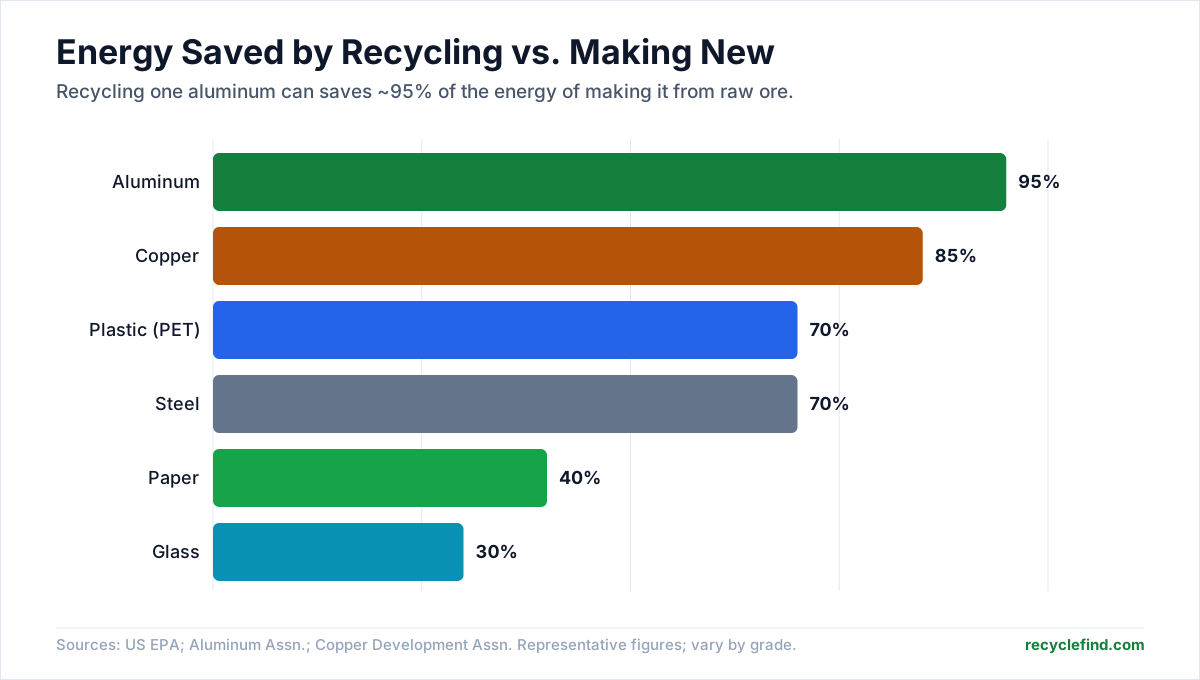
The energy case for recycling
Related Resources
Current Scrap Metal Prices
Live commodity prices that drive your recycling program's revenue.
Waste Diversion Rate Calculator
Track the diversion rate that supports your recycling program's financial case.
Professional Scrap Metal Guide
Pro tips on improving sort quality and selling commercial scrap volumes.
Scrap Value Calculator
Estimate the cash value of specific scrap loads before you sell.
Business recycling ROI: frequently asked questions
How does a business recycling program save money?
Through three channels. The largest for most businesses is avoided disposal cost: waste hauling is usually billed by container size and pickup frequency, so diverting material lets you downsize the dumpster or cut collections. The second is revenue from material with real market value, mainly cardboard, metals, and clean plastics. The third is avoided costs that do not appear on the waste invoice at all, such as landfill taxes, contamination fees, and compliance penalties.
What is a realistic payback period?
Programs built around cardboard and metal in a business that generates a lot of both often pay back within the first year, because the main costs are bins, signage, and staff time. Programs that need capital equipment such as a baler or compactor typically run longer, and the payback depends heavily on your volume and on the current commodity price. The two variables that decide it are how much you divert and what your hauler currently charges you per pickup.
Which materials are actually worth separating?
Old corrugated cardboard is the workhorse for most commercial operations: high volume, easy to bale, and a steady buyer market. Metals pay the most per pound, particularly non-ferrous. Office paper and clean plastics are worth separating at volume. Mixed or contaminated material is usually not worth handling separately, because the sorting labour costs more than the material earns. Start with your two largest waste streams by volume rather than by perceived value.
Do commodity price swings make the savings unreliable?
They affect the revenue side, sometimes sharply, but not the avoided-disposal side. Recycled commodity markets move with global demand and have gone through steep drops, so a program that depends entirely on selling material carries real exposure. A program justified mainly by reduced hauling costs is far more stable, because that saving is set by your contract rather than by the market. When you build the business case, separate the two so you can see which part is at risk.
What usually causes a program to underperform?
Contamination and inconsistent participation, almost always. A recycling stream that arrives at the processor mixed with waste gets downgraded or rejected, which turns an expected revenue line into a disposal charge. The fixes are unglamorous and effective: clear signage at the bin rather than in a handbook, bins placed directly beside every waste bin, and a named person responsible. Programs that skip the behaviour side tend to produce the tonnage but not the savings.
How do I measure whether the program is working?
Track diversion rate, which is recycled plus composted material divided by total waste generated, and track it alongside your actual hauling invoices. Diversion rate on its own can rise while costs stay flat if you never renegotiate your waste service, which is a common and expensive oversight. Baseline both numbers before you start, because without a before figure you cannot demonstrate the saving.
Are these estimates accurate enough for a business case?
Treat the output as a directional model for building an internal case, not as a quote. It runs on typical rates and averages, while your real numbers depend on your hauler contract, local market prices, labour costs, and how much material you actually generate. Use it to size the opportunity and decide whether a program is worth pursuing, then confirm the inputs with your current waste invoice and a quote from a local recycler.