
How long does it take to decompose?
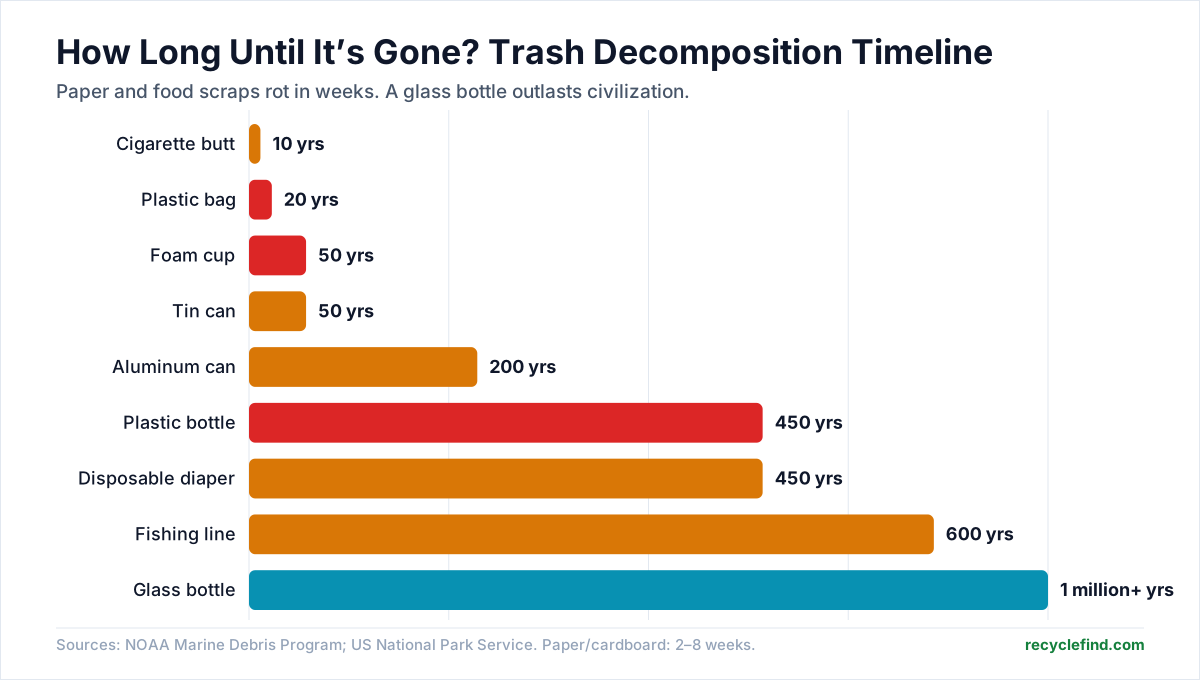
RecycleFind lists estimated landfill breakdown times. A plastic bottle can take 450 years; an aluminum can about 200. Sources: NOAA Marine Debris Program; US National Park Service.
Showing 67 items
Disposable diaper
Extreme Impact450-500 years
Time to decompose in landfill
Contains plastics and gels. One baby uses 5,000+ diapers. Consider cloth diapers to reduce waste.
Diapers (disposable)
Extreme Impact450-500 years
Time to decompose in landfill
Contains plastics and super-absorbent gels. One of the worst waste items. Consider cloth diapers.
Feminine hygiene products
Extreme Impact400-500 years
Time to decompose in landfill
Contain plastic and synthetic materials. Consider reusable or biodegradable alternatives.
Plastic straw
Extreme Impact200-400 years
Time to decompose in landfill
Too small to recycle, often ends up in oceans. Switch to reusable metal, glass, or bamboo straws.
Aluminum can
High Impact200-500 years
Time to decompose in landfill
Takes centuries to decompose but recycling aluminum saves 95% of energy. Always recycle cans.
Plastic coat hangers
Extreme Impact200-400 years
Time to decompose in landfill
Plastic hangers persist for centuries. Choose wood or metal hangers, or return plastic ones to stores.
Carpet (synthetic)
Extreme Impact200-400 years
Time to decompose in landfill
Most carpets are made from synthetic fibers (nylon, polyester). Takes centuries to break down.
Synthetic clothing (polyester)
Extreme Impact200-400 years
Time to decompose in landfill
Polyester and other synthetic fabrics are essentially plastic. Choose natural fibers when possible.
Tire
Extreme Impact200-400 years
Time to decompose in landfill
Tires contain steel, chemicals, and synthetic rubber. Can be recycled into new products.
Mattress
Extreme Impact100-200 years
Time to decompose in landfill
Contains foam, springs, fabric. Very slow to decompose. Many parts are recyclable if separated.
Cotton swabs (plastic stems)
High Impact100-200 years
Time to decompose in landfill
Plastic stems persist for centuries. Switch to paper or bamboo stem alternatives.
Golf balls
Extreme Impact100-200 years
Time to decompose in landfill
Contain rubber, plastic, and various chemicals. Major pollution source in water bodies.
Rubber boot sole
Extreme Impact50-100 years
Time to decompose in landfill
Synthetic rubber is extremely durable and takes generations to break down. Repair shoes when possible.
Steel can (tin can)
High Impact50-100 years
Time to decompose in landfill
Steel eventually rusts away but recycling is far more efficient. Rinse and recycle all food cans.
Sponges (synthetic)
Extreme Impact50-100 years
Time to decompose in landfill
Most kitchen sponges are plastic foam that never fully decomposes. Switch to natural alternatives.
Car parts (plastic)
Extreme Impact50-100 years
Time to decompose in landfill
Plastic automotive parts are very durable. Many can be recycled at auto dismantlers.
Plastic flower pots
Extreme Impact50-100 years
Time to decompose in landfill
Black plastic pots can't be detected by recycling sorters. Return to nurseries for reuse.
Rope (nylon)
High Impact30-40 years
Time to decompose in landfill
Synthetic rope is extremely durable and deadly to marine life. Natural fiber ropes decompose faster.
Nylon fabric
High Impact30-40 years
Time to decompose in landfill
Nylon is very durable and slow to decompose. Used in activewear, bags, and outdoor gear.
Leather shoes
High Impact25-40 years
Time to decompose in landfill
Genuine leather is treated with chemicals that slow decomposition significantly. Repair or donate instead.
Tennis balls
High Impact25-40 years
Time to decompose in landfill
Made from rubber and synthetic felt. Very durable but eventually break down.
Painted/treated wood
High Impact13-15 years
Time to decompose in landfill
Paint and chemical treatments significantly slow decomposition. Can leach toxins into soil.
Plastic bag
Extreme Impact10-20 years
Time to decompose in landfill
Breaks into microplastics but never truly disappears. Use reusable bags instead. Return to store collection bins.
Lumber (untreated)
Medium Impact10-20 years
Time to decompose in landfill
Natural wood decomposes faster but still takes years. Reuse or repurpose whenever possible.
Denim jeans
Medium Impact10-20 years
Time to decompose in landfill
Heavy cotton fabric treated with dyes and chemicals. Takes longer than regular cotton to decompose.
Balloons (latex)
High Impact5-10 years
Time to decompose in landfill
Even 'latex' balloons can take years to decompose and are deadly to wildlife. Avoid balloon releases.
Tea bags (with plastic)
Medium Impact5-10 years
Time to decompose in landfill
Many tea bags are sealed with plastic that doesn't decompose. Look for plastic-free brands.
Bamboo
Low Impact3-5 years
Time to decompose in landfill
Bamboo decomposes faster than hardwood. Sustainable alternative for many wood products.
Wool sock
Medium Impact1-5 years
Time to decompose in landfill
Natural wool breaks down slower than cotton but is still biodegradable. Donate or textile recycle first.
Cigarette butt
High Impact1-10 years
Time to decompose in landfill
Contains plastic fibers and toxic chemicals that leach into soil. One of the most common litter items worldwide.
Plywood
Medium Impact1-3 years
Time to decompose in landfill
Glues and chemicals slow decomposition compared to natural wood. Better to reuse or repurpose.
Particle board
Medium Impact1-3 years
Time to decompose in landfill
Compressed wood chips and glue. Decomposes faster than solid wood but contains adhesives.
Carpet (wool)
Medium Impact1-5 years
Time to decompose in landfill
Natural wool carpets decompose much faster than synthetic. Better environmental choice.
Orange peel
Low Impact6 months - 2 years
Time to decompose in landfill
Citrus oils slow decomposition. Still relatively fast compared to plastics. Excellent for composting.
Newspaper
Low Impact6-12 months
Time to decompose in landfill
In landfills with limited oxygen, newspapers can remain readable for decades. Recycle or compost instead.
Cotton t-shirt
Medium Impact5-6 months
Time to decompose in landfill
Pure cotton decomposes relatively quickly. However, synthetic blends can take years longer.
Cotton rope
Low Impact5-12 months
Time to decompose in landfill
Natural cotton rope decomposes relatively quickly, especially in moist conditions.
Tea bags (paper)
Low Impact3-6 months
Time to decompose in landfill
Paper tea bags decompose relatively quickly. However, many contain plastic sealants - check packaging.
Cardboard box
Low Impact2-3 months
Time to decompose in landfill
Corrugated cardboard breaks down faster than you'd think, but recycling saves trees and energy.
Cardboard pizza box (clean)
Low Impact2-3 months
Time to decompose in landfill
Clean cardboard decomposes quickly. Greasy boxes take longer and may not be compostable.
Paper bag
Low Impact1-3 months
Time to decompose in landfill
Breaks down relatively quickly, especially when exposed to moisture. Much better than plastic bags.
Sponges (natural)
Low Impact1-3 months
Time to decompose in landfill
Natural cellulose or sea sponges decompose quickly. Much better environmental choice.
Apple core
Low Impact2-8 weeks
Time to decompose in landfill
Decomposes quickly in nature but takes longer in oxygen-deprived landfills. Best composted at home.
Banana peel
Low Impact2-8 weeks
Time to decompose in landfill
Rich in nutrients, decomposes rapidly when composted. Takes longer in landfills where conditions are poor.
Paper towel
Low Impact2-6 weeks
Time to decompose in landfill
Decomposes quickly but better to use reusable cloths. Compostable if not contaminated with chemicals.
Cotton swabs (paper stems)
Low Impact2 weeks - 3 months
Time to decompose in landfill
Paper stem cotton swabs decompose quickly. Much better environmental choice.
Packing peanuts (biodegradable)
Low Impact1 week - 1 month
Time to decompose in landfill
Made from cornstarch, these dissolve in water. Excellent eco-friendly packing material.
Glass bottle
Medium Impact1,000+ years (possibly never)
Time to decompose in landfill
Glass is essentially forever but is infinitely recyclable without quality loss. Always recycle glass.
May never fully decompose - breaks into microplastics that persist indefinitely
Fishing line
Extreme Impact600+ years
Time to decompose in landfill
Monofilament line is extremely persistent and deadly to wildlife. Dispose at fishing line recycling stations.
May never fully decompose - breaks into microplastics that persist indefinitely
Styrofoam cup
Extreme Impact500+ years (possibly never)
Time to decompose in landfill
Polystyrene foam may never fully decompose. Breaks into tiny pieces that harm wildlife. Avoid entirely.
May never fully decompose - breaks into microplastics that persist indefinitely
Plastic toys
Extreme Impact500+ years
Time to decompose in landfill
Most toys are made from various plastics and chemicals. Takes centuries to break down.
May never fully decompose - breaks into microplastics that persist indefinitely
Balloons (mylar)
Extreme Impact500+ years (possibly never)
Time to decompose in landfill
Metallic balloons are made of plastic with metal coating. Extremely persistent in environment.
May never fully decompose - breaks into microplastics that persist indefinitely
Vinyl flooring
Extreme Impact500+ years (possibly never)
Time to decompose in landfill
PVC flooring is extremely persistent and can release toxins. Consider natural alternatives.
May never fully decompose - breaks into microplastics that persist indefinitely
Packing peanuts (styrofoam)
Extreme Impact500+ years (possibly never)
Time to decompose in landfill
Polystyrene packing peanuts may never decompose. Use biodegradable peanuts or paper alternatives.
May never fully decompose - breaks into microplastics that persist indefinitely
Plastic bottle (PET)
Extreme Impact450+ years
Time to decompose in landfill
One of the most common litter items. Takes centuries to break down into microplastics. Always recycle.
May never fully decompose - breaks into microplastics that persist indefinitely
Motor oil bottle (plastic)
Extreme Impact450+ years
Time to decompose in landfill
HDPE plastic bottles persist for centuries. Must be completely empty and clean to recycle.
May never fully decompose - breaks into microplastics that persist indefinitely
Plastic utensils
Extreme Impact400+ years
Time to decompose in landfill
Single-use plastics are a major pollution source. Keep reusable utensils in your bag or car.
May never fully decompose - breaks into microplastics that persist indefinitely
Six-pack plastic rings
Extreme Impact400+ years
Time to decompose in landfill
Infamous for harming marine life. Cut them up before disposal. Better yet, buy cans in cardboard boxes.
May never fully decompose - breaks into microplastics that persist indefinitely
Aluminum foil
High Impact400+ years
Time to decompose in landfill
Very thin aluminum still lasts centuries. Clean foil can be recycled - ball it up to golf-ball size.
May never fully decompose - breaks into microplastics that persist indefinitely
Toothbrush
Extreme Impact400+ years
Time to decompose in landfill
Billion+ toothbrushes discarded annually. Switch to bamboo brushes with replaceable heads.
May never fully decompose - breaks into microplastics that persist indefinitely
Disposable razor
Extreme Impact200+ years
Time to decompose in landfill
Mixed plastic and metal makes decomposition slow. Consider safety razors with replaceable blades.
May never fully decompose - breaks into microplastics that persist indefinitely
Batteries
Extreme Impact100+ years
Time to decompose in landfill
Contains toxic heavy metals that leach into soil. Never trash batteries - take to collection centers.
May never fully decompose - breaks into microplastics that persist indefinitely
Wet wipes
Extreme Impact100+ years
Time to decompose in landfill
Most contain plastic fibers despite 'flushable' claims. Cause major sewer blockages.
May never fully decompose - breaks into microplastics that persist indefinitely
Milk carton
High Impact5+ years
Time to decompose in landfill
Lined with plastic and foil, making decomposition very slow. Many facilities now recycle them - check locally.
May never fully decompose - breaks into microplastics that persist indefinitely
Chewing gum
High Impact5+ years (possibly never)
Time to decompose in landfill
Made from synthetic rubber polymers. Modern gum may never fully decompose. Wrap in paper and trash it.
May never fully decompose - breaks into microplastics that persist indefinitely
Cardboard milk cartons (waxed)
High Impact5+ years
Time to decompose in landfill
Wax or plastic coating prevents normal paper decomposition. Modern cartons are often recyclable.
May never fully decompose - breaks into microplastics that persist indefinitely
Tetra Pak cartons
High Impact5+ years
Time to decompose in landfill
Multi-layer packaging (paper, plastic, aluminum) makes decomposition slow. Can be recycled at some facilities.
May never fully decompose - breaks into microplastics that persist indefinitely
Environmental Impact Guide:
The Landfill Reality
When items go to landfills, they're buried under tons of waste with limited oxygen, moisture, and light. This anaerobic environment dramatically slows decomposition. Items that might break down in months under ideal composting conditions can persist for decades or centuries in landfills.
Even "biodegradable" items may not decompose in landfills. Newspapers from the 1960s have been found still readable. The solution? Reduce consumption, reuse when possible, and recycle properly to keep items out of landfills entirely.
What You Can Do
- •Choose reusables: Invest in reusable water bottles, bags, and containers
- •Recycle properly: Most items on this list are recyclable when cleaned and sorted correctly
- •Compost organic waste: Food and yard waste decompose in weeks when composted, not years
- •Buy less packaging: Choose products with minimal or recyclable packaging
- •Repair before replacing: Extend the life of items to reduce waste generation
Related Resources
Plastic Recycling Guide
Learn which plastics can be recycled and how to prep them properly.
Waste Diversion Calculator
Measure how much waste you keep out of the landfill each year.
Materials Database
See how to recycle every type of material instead of letting it sit in a landfill.
Carbon Footprint Calculator
See the CO2 savings your recycling habits create.
Decomposition times: frequently asked questions
How long does it take for plastic to decompose?
A PET plastic bottle is commonly estimated at 450 years or more, a plastic bag at 10 to 20 years, and styrofoam at 500 years or effectively never. The honest answer is that nobody has watched a plastic bottle all the way through, because mass-produced plastic is younger than the timescales involved. These numbers are projections from how fast plastic breaks down under sunlight and weathering, not observations.
Do plastics actually decompose at all?
Not in the way an apple core does. Food waste is broken down by microbes into water, carbon dioxide, and soil. Most plastic instead photodegrades: sunlight makes it brittle and it fragments into ever smaller pieces, ending up as microplastics that are still plastic. So a plastic bottle does not disappear after 450 years, it stops being visible as a bottle. That is why the numbers on this page are better read as how long something stays in the environment than as how long until it is gone.
Does anything decompose faster in a landfill?
Usually the opposite. A modern landfill is lined, compacted, and capped, which deliberately limits the oxygen, moisture, and sunlight that decomposition needs, mainly to stop contaminants from leaching into groundwater. Landfill excavations have turned up newspapers still readable and food waste still recognizable after decades. Most figures you see, including the ones here, describe open-air conditions, so buried waste often lasts considerably longer.
How long does glass take to decompose?
Glass is usually listed at 1,000 years or more, and in practice it is closer to indefinitely. Glass is chemically inert silica: it physically wears down into smaller and smaller fragments, which is what sea glass is, but it does not break down into anything else. This is also why glass is worth recycling repeatedly, since it can be remelted without losing quality.
Why do aluminum cans take so long if aluminum is recyclable?
The two facts are unrelated. Left in the environment an aluminum can takes roughly 200 to 500 years to corrode away, because the oxide layer that forms on the surface protects the metal underneath. Recycling bypasses that entirely: a can put in a bin is remelted into new aluminum with about 95% less energy than making it from raw bauxite, and it can come back as a new can within weeks.
Does biodegradable mean the same thing as compostable?
No, and the difference matters. Biodegradable only claims that something will eventually break down, with no timeframe and no standard, so the label alone tells you very little. Compostable means it breaks down into non-toxic material within a defined period under defined conditions. Many compostable plastics need an industrial composting facility running at sustained high temperatures, and will not break down properly in a home compost pile or in a landfill.
Which everyday items last longest?
Among common litter, fishing line is among the worst at roughly 600 years, followed by styrofoam and disposable diapers at 450 to 500 years, plastic bottles at 450 years or more, and tires at 200 to 400 years. Cigarette butts surprise people: the filters are cellulose acetate, a plastic, so they take 1 to 10 years rather than the weeks most smokers assume, and they are one of the most littered items in the world.