Storage.com
Clear the clutter. Keep what matters.
Compare U.S. storage units for the furniture and seasonal gear you want to keep after a cleanout.
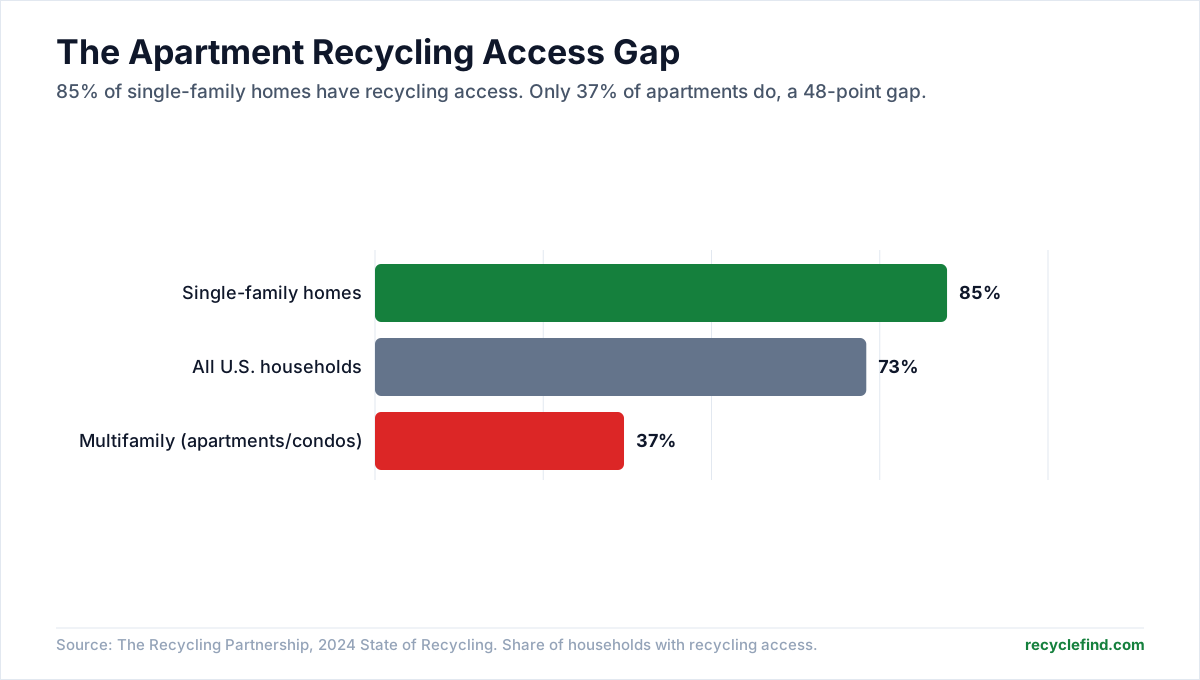
Compare nearby storage unitsThe U.S. recycling system was built for the suburbs. Only 37% of apartments and condos have recycling access, versus 85% of single-family homes, leaving roughly 20 million households behind.
of apartments have recycling access
access gap vs. single-family homes
multifamily households shut out
of recyclables landfilled a year
You sign the lease, haul the last box up the stairs, and walk out to the parking lot to find a single trash dumpster. No recycling bin. Nowhere to put the cardboard your whole move just generated. If that sounds familiar, you are not imagining it, and you are far from alone.
American recycling was designed around the single-family home: a house, a driveway, and a city truck that comes down the street once a week. Tens of millions of people who live in apartments and condos were never really part of that plan. Below is what the data actually shows about the gap, why it exists, and what you can do about it right now.
The single most important number is the access gap. Access means a household can actually recycle where it lives, whether through a curbside bin or a building collection program. By that measure, apartments trail houses badly.
| Housing type | Recycling access | Avg. diversion rate | Recycling set out / year |
|---|---|---|---|
| Single-family homes | 85% | 16.0% | 0.23 tons |
| All U.S. households | 73% | n/a | n/a |
| Multifamily (apartments & condos) | 37% | 14.6% | 0.14 tons |
Access figures: The Recycling Partnership, 2024 State of Recycling. Diversion and set-out figures: U.S. EPA's landmark national multifamily recycling survey. Diversion rate is the share of a household's total refuse that is diverted to recycling; the per-household volume comparison is long-standing but pre-dates current programs, so treat it as directional.
It is tempting to picture apartment dwellers as a small slice of the country. They are not. There are more than 46 million renter-occupied households in the U.S., about a third of all occupied homes (roughly 34%). When a third of the country's homes sit largely outside the recycling system, that is not an edge case. It is a structural failure in how the system was built.
The gap compounds a system that already leaks. Nationally, only about 21% of residential recyclables are actually captured, and even among households that have a service, just 59% use it. The Recycling Partnership estimates roughly 7.5 million tons of recyclables are lost each year specifically because multifamily homes are not served or not participating, the majority of the ~8.6 million tons the country landfills annually.
For the national picture those losses sit inside, including recycling rates for every material and the EPA and USGS figures behind them, see our recycling statistics reference.
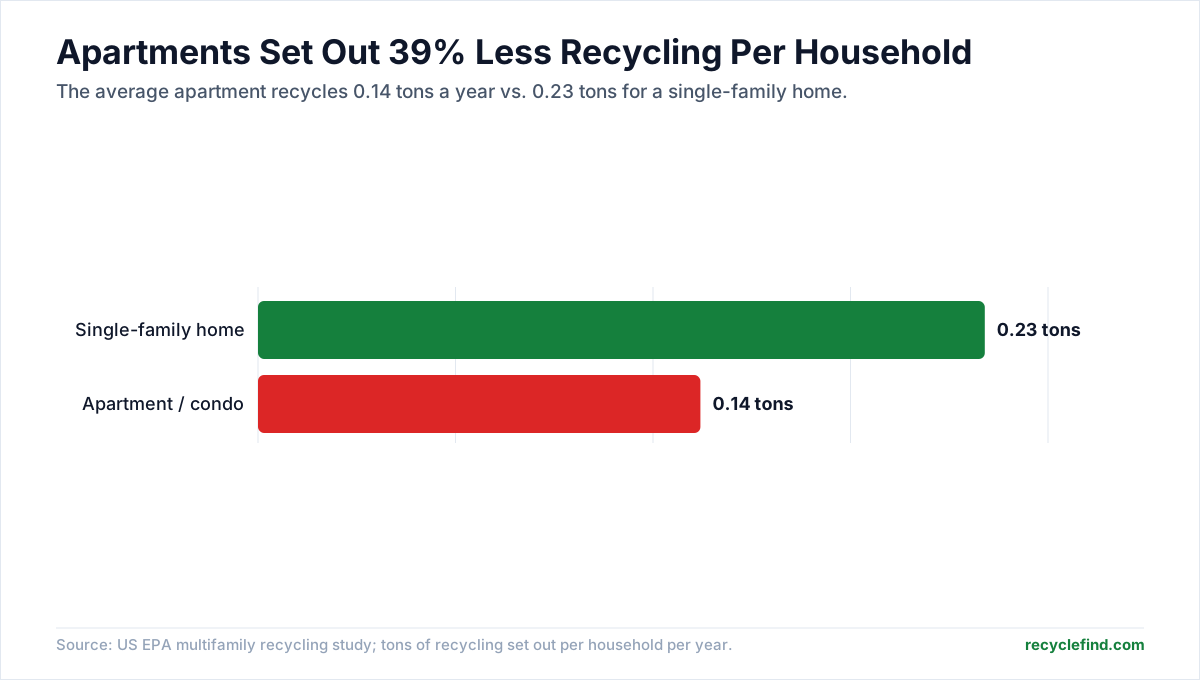
It also shows up in volume. The average apartment household sets out about 0.14 tons of recycling per year, versus 0.23 tons for a single-family home. That is not because renters care less. It is because the infrastructure to capture that material mostly is not there.
The gap is not about lazy tenants or indifferent landlords. It comes from a handful of systemic barriers that make recycling genuinely hard to offer in a multifamily building. Understanding them explains why the problem has been so stubborn.
Older buildings were never designed with a footprint for a second set of dumpsters. Adding recycling means giving up parking, storage, or trash-room space that often does not exist.
When one resident drops a bag of garbage or food waste into a shared bin, haulers can reject the whole load or charge the property a contamination fee. Property managers facing repeated fines often just cancel the recycling service.
Single-family recycling is usually bundled into municipal taxes. Apartment complexes are commercial accounts that must contract private haulers at a premium, so recycling reads as a pure added cost with no offsetting revenue.
High move-in and move-out rates make consistent recycling education almost impossible. Every new lease resets the learning curve, which drives both low participation and high contamination.
The contamination trap. These barriers reinforce each other. Shared bins with high turnover produce more contamination, contamination triggers hauler fines, and fines push managers to drop the service, which removes the very infrastructure that would let residents learn to recycle well. To break the loop from your side, our contamination prevention guide covers what actually ruins a load and how to avoid it.
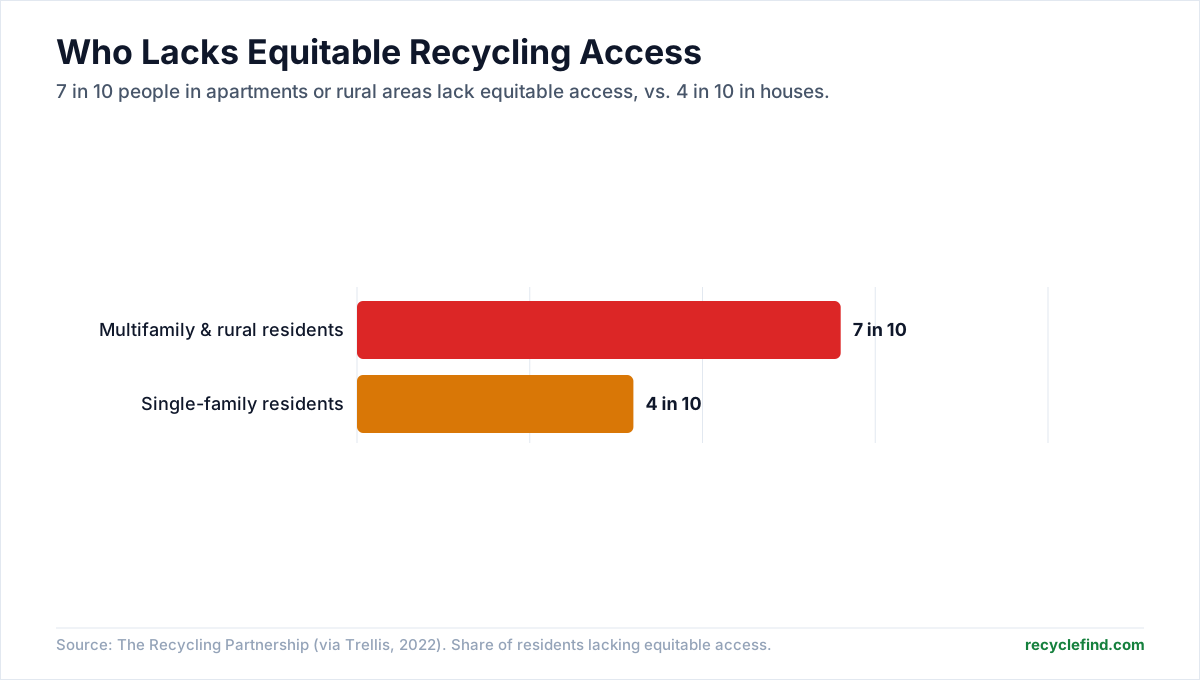
The access gap does not fall evenly. Because apartments and condos are concentrated in denser, lower-income, and more diverse neighborhoods, the people most likely to be shut out of recycling are renters, communities of color, and rural residents. Where 4 in 10 single-family residents lack equitable access, that number jumps to 7 in 10 for people in multifamily housing or rural communities.
Policy is beginning to catch up, unevenly. A growing set of states and cities now mandate multifamily recycling rather than leaving it optional:
These are real steps, but they cover a minority of the country. For most renters, systemic change is still years away, which brings us to the practical question.
You do not have to wait for your building or your state to fix this. The fastest path for the 20 million households without curbside access is a drop-off center: a municipal recycling site, county convenience center, or transfer station that takes your material for free. Many grocery and hardware stores also accept specific items like plastic bags, batteries, and electronics.
The multifamily recycling gap has stayed in the conversation through 2026, both in policy and in everyday frustration:
Sources: City and County of Denver; Waste Dive; Community Impact; NYC DSNY. Reflects developments as of mid-July 2026.
This report compiles figures from national recycling studies and U.S. housing data. Access rates (85% single-family, 37% multifamily, 73% overall), the 21% residential capture rate, participation figures, and the ~7.5 million tons of multifamily-related loss come from The Recycling Partnership's 2024 State of Recycling report. Diversion rates (16.0% vs. 14.6%) and per-household set-out volumes (0.23 vs. 0.14 tons) come from EPA's landmark national multifamily recycling survey; these are long-cited but older figures, so we present them as directional rather than current. Housing counts come from U.S. Census data on renter-occupied households (about 46 million, roughly 34% of occupied homes). The 8.6 million tons and roughly $4 billion in landfilled recyclables is an EverestLabs estimate. Equity figures (4 in 10 vs. 7 in 10) come from The Recycling Partnership as reported by Trellis.
On the laws: California's AB 341 (2012) is the multifamily mixed-recycling mandate, while SB 1383 (2022) is a separate organics mandate; we keep them distinct. Figures are drawn from the most recent editions available as of July 2026. These are national averages: your city or building may differ, and local drop-off options can fill much of the gap even where curbside access is missing.
Charts on this page may be reused with attribution to RecycleFind and a link to this page. Published 2026-07-15. Last updated 2026-07-15.
About 37% of U.S. multifamily homes (apartments and condos) have recycling access, compared with 85% of single-family homes and 73% of all households. That means roughly 20 million multifamily households, close to 63% of all apartments and condos, are effectively excluded from the recycling system.
Four barriers explain most of it: older buildings lack the physical space for separate recycling dumpsters, property managers face contamination fines when shared bins get polluted, apartments pay commercial haulers at a premium instead of being covered by municipal taxes, and high tenant turnover makes recycling education hard to sustain.
Use a drop-off center or transfer station. Municipal drop-off sites, county convenience centers, and many grocery and hardware stores accept cans, bottles, paper, cardboard, and often glass and electronics for free. You can search our recycling center directory by your ZIP code or city to find the closest one to your apartment.
The average single-family home sets out about 0.23 tons of recycling per year, while the average apartment sets out about 0.14 tons, roughly 39% less. Apartment diversion rates (about 14.6%) also trail single-family rates (about 16.0%), and apartment loads tend to carry more contamination. These per-household comparisons come from EPA's landmark national multifamily survey.
It depends on where you live. A growing number of places mandate multifamily recycling, including California (AB 341 requires recycling at 5-plus-unit complexes, while the separate SB 1383 law covers organics), Washington, D.C., and parts of Oregon. Most of the country still has no such requirement, which is why the access gap persists.
The U.S. sends an estimated 8.6 million tons of recyclable material to landfills every year, worth roughly $4 billion. Limited multifamily access is a significant contributor, since a large and growing share of Americans live in apartments and condos.
Build a practical sorting and storage routine when space and curbside rules are limited.
Keep shared bins usable by learning the preparation mistakes that send recyclable material to landfill.
See the national material and recovery trends behind the apartment recycling access gap.
Get a real cash offer in about 2 minutes. Free towing, any condition, even if it doesn't run. No haggling, no phone calls.
See My Car's OfferClear the clutter. Keep what matters.
Compare U.S. storage units for the furniture and seasonal gear you want to keep after a cleanout.
Compare nearby storage unitsPut organic produce on your weekly menu
Explore Full Circle farm boxes and check delivery for your ZIP code.
Check delivery in my ZIPCarry your everyday essentials in a vegan bag
Explore Svala handbags and totes for errands, work and weekends away.
Shop Svala bags